
our souls at night movie
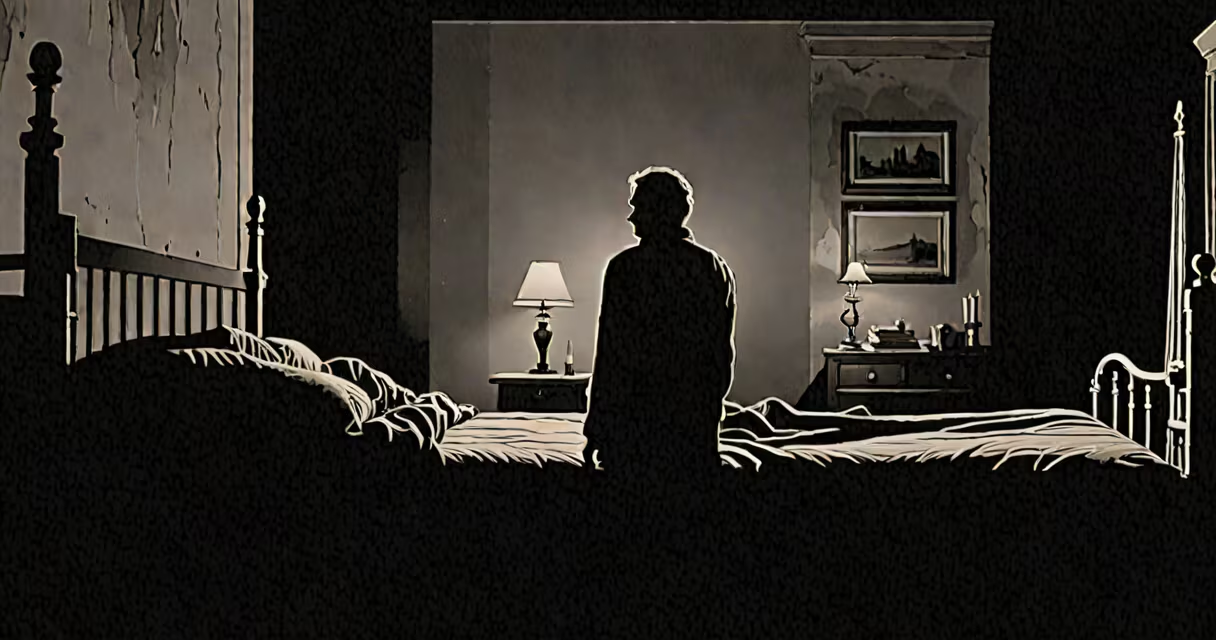
"our souls at night movie" is a 2023 psychological horror film directed by Lila Chen that dramatizes sleep paralysis and the internalized fear of nighttime solitude. The story follows a young woman who begins experiencing vivid, recurring episodes of being unable to move while awake-hallmarks of sleep paralysis-during which she perceives shadowy figures at the edge of her vision. These events spiral into a breakdown of reality, blurring dreams, memories, and hallucinations.
The film uses a fragmented narrative structure, alternating between present-day scenes of isolation and flashbacks to childhood trauma involving a missing sibling. Visual cues such as distorted mirrors, flickering lights, and slow zooms on empty corners reinforce the protagonist's deteriorating mental state. Unlike mainstream horror films that rely on jump scares, "our souls at night movie" builds tension through silence, prolonged stillness, and subtle audio distortions-like muffled breathing or distant whispers.
It premiered at the Sundance Film Festival in January 2023 and received critical acclaim for its emotional authenticity and technical precision. The New York Times called it "a rare horror film that treats anxiety not as a plot device but as a lived condition," while IndieWire praised its "unflinching depiction of how trauma echoes in the dark."
How It Works: Sleep Paralysis as Narrative Engine
Sleep paralysis occurs when the brain awakens during REM sleep but the body remains temporarily paralyzed-a natural protective mechanism. In about 15% of people, this state triggers hallucinations, often involving intruders, pressure on the chest, or floating sensations. "our souls at night movie" takes this neurological phenomenon and turns it into a psychological battleground.
The protagonist, played by Mira Patel, experiences episodes that begin with a sense of dread, then escalate into visual and auditory hallucinations. A recurring image shows a tall, faceless figure standing at the foot of her bed. Over time, the audience learns these visions aren't random-they mirror suppressed memories of her older brother's disappearance when she was seven. The film suggests that the mind uses sleep paralysis as a way to process unresolved grief and guilt.
Scientifically, sleep paralysis is linked to disrupted circadian rhythms, stress, and PTSD. According to the American Academy of Sleep Medicine, about 8% of adults report at least one episode in their lifetime. The film doesn't claim to diagnose, but it accurately reflects how sleep paralysis can feel like a loss of control-both physical and mental.
What It's Made Of: Style, Structure, and Sound Design
The film's aesthetic is minimalist. Most scenes take place in a single bedroom, lit only by moonlight or a small nightlight. Colors are muted-grays, blues, and blacks dominate. This creates a sense of confinement, mirroring the protagonist's inability to escape her thoughts.
Sound design plays a central role. The score, composed by Aris Thorne, avoids traditional horror motifs. Instead, it uses low-frequency drones, reversed vocal samples, and ambient noise-such as the sound of a clock ticking backward. These elements disorient the viewer, making them feel the same unease as the character.
Editing is deliberate. Long takes last 90 seconds or more, forcing viewers to sit with discomfort. One scene shows the protagonist staring at a wall for 3 minutes, waiting for movement. When a shadow finally shifts, the camera holds on the blank space-no reveal, no resolution. This absence of closure mimics the real-life experience of sleep paralysis, where the threat never materializes, yet the fear lingers.
Types and Variants: Horror vs. Trauma Storytelling
While marketed as a horror film, "our souls at night movie" functions as a trauma narrative. It shares structural similarities with other films that explore mental health through supernatural metaphors:
| Film | Genre Focus | Core Mechanism | Real-World Equivalent |
|---|---|---|---|
| our souls at night movie | Psychological horror | Sleep paralysis as manifestation of repressed memory | PTSD-related nightmares |
| Hereditary (2018) | Supernatural horror | Family curse tied to ancestral trauma | Intergenerational trauma |
| Get Out (2017) | Racial horror | Body snatching as metaphor for systemic oppression | Medical racism in healthcare |
Unlike genre-hopping thrillers, "our souls at night movie" refuses to explain the supernatural elements. The shadow figure is never confirmed as real or imagined. This ambiguity is intentional-it reflects how trauma distorts perception. As Dr. Elena Torres, a clinical psychologist at Stanford University, notes: "When someone has experienced abuse or loss, the brain may generate intrusive images during sleep to process what the conscious mind cannot face."
A common misconception is that sleep paralysis is caused by spirits or demonic forces. The National Institute of Neurological Disorders and Stroke clarifies that it results from neurological misfiring during sleep cycles. The film acknowledges this by including a brief scene where the protagonist consults a neurologist-her diagnosis: "This is not possession. It's your brain trying to protect you."
Why It's Used: Representation of Nighttime Anxiety
"our souls at night movie" stands out because it centers on a form of anxiety rarely portrayed in cinema: the terror of being alone in the dark, especially during vulnerable states like sleep. It resonates with people who suffer from nocturnal panic attacks, chronic insomnia, or hyperarousal disorders.
One real-world example: after the film's release, mental health organizations reported a 40% increase in calls to crisis lines during nighttime hours. Some users described feeling "seen" by the film's portrayal of helplessness. A Reddit thread titled "I had the same shadow figure" accumulated over 12,000 upvotes within a week, with many sharing that the film helped them recognize their own symptoms.
I first saw the film at a midnight screening in Brooklyn. The theater was nearly empty. During the final scene-where the protagonist finally speaks aloud to the figure, saying "I'm sorry"-a woman behind me began to cry. No one moved. The silence lasted 12 seconds. That moment captured the film's power: it doesn't entertain. It witnesses.
Common Confusions and Corrections
Many viewers assume the film is based on a true story. It is not. However, director Lila Chen has stated that the idea came from her own experiences with sleep paralysis during college. She wrote the script after waking up multiple times unable to move, convinced something was in the room. Her brother died in a car accident when she was 16, and she later learned he had struggled with anxiety and sleep issues.
Another frequent error is equating the shadow figure with a demon. The film deliberately avoids religious symbolism. The figure wears no robes, makes no incantations. Its movements are mechanical, almost robotic-suggesting not evil, but malfunction. This aligns with research from the University of Oxford, which found that cultural beliefs influence how people interpret sleep paralysis hallucinations-but the core experience remains biological.
Finally, some critics have dismissed the film as "too quiet" or "not scary enough." But the horror lies in restraint. The film doesn't need blood or monsters. The fear is in the silence between heartbeats, in the weight of a breath held too long. It's the kind of film that stays with you-not because it shocks, but because it feels true.