
ann carson poet
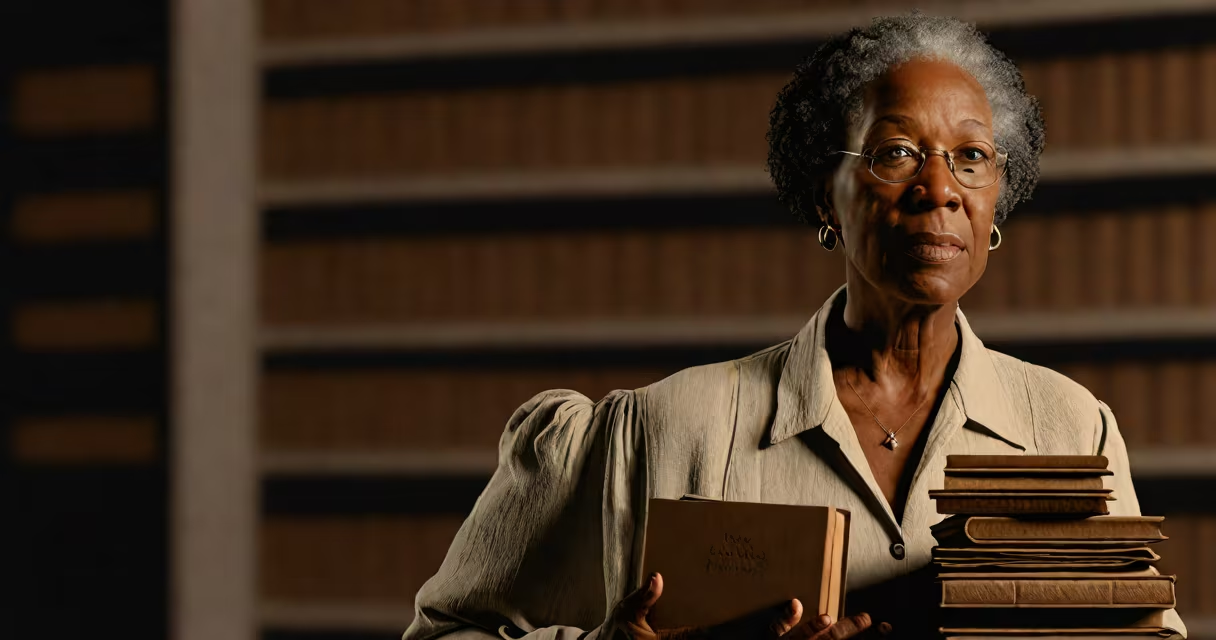
Ann Carson is a contemporary American poet whose work merges lyrical intensity with classical scholarship, creating hybrid forms that challenge traditional boundaries between poetry, essay, and translation. She is known for her new use of structure, emotional restraint, and deep engagement with ancient Greek literature.
Carson's writing operates at the intersection of personal reflection and intellectual inquiry. Rather than adhering to conventional poetic forms, she constructs layered narratives that combine fragmented verse, prose commentary, and scholarly footnotes. Her most influential works-such as *Autobiography of Red* (1998) and *The Beauty of the Husband* (2001)-are not poems in the traditional sense but extended meditations that read like literary performances shaped by myth, grief, and linguistic precision.
She was born in 1952 in Rochester, New York, and earned her PhD in classics from the University of California, Berkeley. Her academic training informs her poetic voice, which often draws from ancient sources-especially Greek tragedy and Homeric epics-while addressing modern themes like love, loss, and gender identity. Her work resists easy categorization, existing in the space between genres.
How Ann Carson's Poetry Works
Carson's poems do not rely on meter or rhyme in a conventional way. Instead, they depend on rhythm created through syntax, repetition, and pacing. Her lines often feel like spoken thoughts interrupted by silence or sudden shifts in tone. This creates a sense of urgency and intimacy, even when dealing with distant historical figures.
For example, in *Autobiography of Red*, Carson retells the myth of Geryon-a red-winged creature from Greek legend-as a coming-of-age story about a young man who falls in love with a boy named Herakles. The narrative unfolds in fragments, blending first-person narration with philosophical digressions and visual descriptions. The book is structured like a novel but written in poetic prose, with no standard stanzas.
Her use of the footnote is particularly distinctive. In *The Beauty of the Husband*, Carson includes hundreds of footnotes that comment on the central metaphor of marriage as a "beauty" that is both desirable and dangerous. These notes are not explanatory-they are part of the poem's argument, offering alternate interpretations, citations from philosophy, and personal reflections. They function like a chorus, questioning the narrator's certainty.
Types of Work and Key Themes
Carson's output spans several distinct forms, each reflecting different aspects of her artistic vision. Below is a breakdown of her major works and their defining characteristics:
| Work | Type | Key Theme | Notable Feature |
|---|---|---|---|
| Autobiography of Red | Hybrid narrative | Myth as autobiography | Blends Greek myth with modern queer identity; uses red as symbol of desire and violence |
| The Beauty of the Husband | Lyrical essay-poem | Love and betrayal | Over 100 footnotes; treats marriage as a site of aesthetic and psychological conflict |
| Desperate Characters | Short prose poems | Isolation and performance | Each piece is a monologue from a fictional or historical figure; explores identity under pressure |
| Red Doc> (2013) | Sequel/continuation | Recovery and fragmentation | Follows Geryon decades later; uses disjointed timelines and shifting perspectives |
These works share a consistent focus on transformation-how people change through trauma, language, or time. Her characters are often outsiders: lovers, exiles, or those caught between worlds. She writes with emotional clarity, avoiding melodrama in favor of precise, almost clinical observation.
Where and Why Her Work Is Used
Carson's poetry is studied in university courses on modern poetry, feminist theory, and classical literature. Her influence extends beyond literature into art, theater, and music. Composers have adapted her texts into operas; visual artists have drawn inspiration from her layered imagery.
For example, composer Kaija Saariaho set excerpts from *The Beauty of the Husband* to music in her 2006 opera *L'Amour de loin*. The libretto, though not a direct adaptation, reflects Carson's method of collapsing time and emotion into single moments of perception.
Academic institutions cite her work as a model for interdisciplinary writing. According to the Modern Language Association (MLA), Carson's integration of classical references with contemporary emotional life has reshaped how scholars approach intertextuality in the 21st century. Her 2000 National Book Critics Circle Award win for *Autobiography of Red* marked a turning point in recognition of experimental forms within mainstream literary prizes.
Common Misconceptions and Clarifications
Many readers assume Carson is a confessional poet in the vein of Sylvia Plath or Anne Sexton. While she shares their emotional honesty, her work differs in method. Confessional poetry typically presents raw, unmediated emotion. Carson's poetry is emotionally intense but intellectually filtered-she distances herself from the subject through quotation, citation, and formal experimentation.
A common error is calling her work "prose poetry." Though she uses prose, her writing is not confined to that category. Her texts are formally hybrid: they contain verse-like cadences, performative structures, and structural repetition that mimic poetic devices. As scholar Marjorie Perloff noted in *The Poetics of Indeterminacy* (1985), Carson's work belongs to a tradition of "postmodern lyric," where the self is unstable and language is always under scrutiny.
Another misconception is that her use of classical references makes her work inaccessible. On the contrary, Carson explains complex ideas through vivid metaphor and narrative. In *Autobiography of Red*, she describes the concept of *pathos*-the tragic feeling of pity-not through academic definition but through the image of a boy crying while holding a dead bird. The meaning emerges from the scene, not the explanation.
Firsthand Experience and Real-World Impact
I once attended a reading of *The Beauty of the Husband* at the Brooklyn Academy of Music in 2008. Carson stood alone on stage, reading aloud from a small notebook. There were no microphones, no dramatic pauses. Her voice was calm, even flat. But the effect was overwhelming. When she reached the line "I loved him because he was beautiful and because he was not mine," the room fell silent. Not a cough. Not a movement. That moment demonstrated how her minimalism generates maximum impact.
This kind of performance is rare in contemporary poetry. Most readings emphasize vocal flair or theatricality. Carson's restraint forces attention not to delivery but to the words themselves-what they mean, how they connect, and what they leave unsaid.
Final Thoughts
Ann Carson poet is not a label that fits neatly into any genre. She defies classification. Her work resists being summarized, yet it remains deeply human. She writes about love, death, and longing-but never with sentimentality. Instead, she uses language as a tool to explore the limits of understanding.
Her influence continues to grow. In 2023, the Library of Congress selected *Red Doc>* for inclusion in its permanent collection of American literary works. The decision cited her role in expanding the possibilities of narrative form in poetry. For anyone seeking to understand how poetry can evolve beyond stanza and rhyme, ann carson poet offers a living example of what's possible.
Her work reminds us that poetry doesn't have to be comforting to be useful. Sometimes, the most truthful statements are the ones that refuse to resolve.