
What Causes a Swollen Thyroid Gland
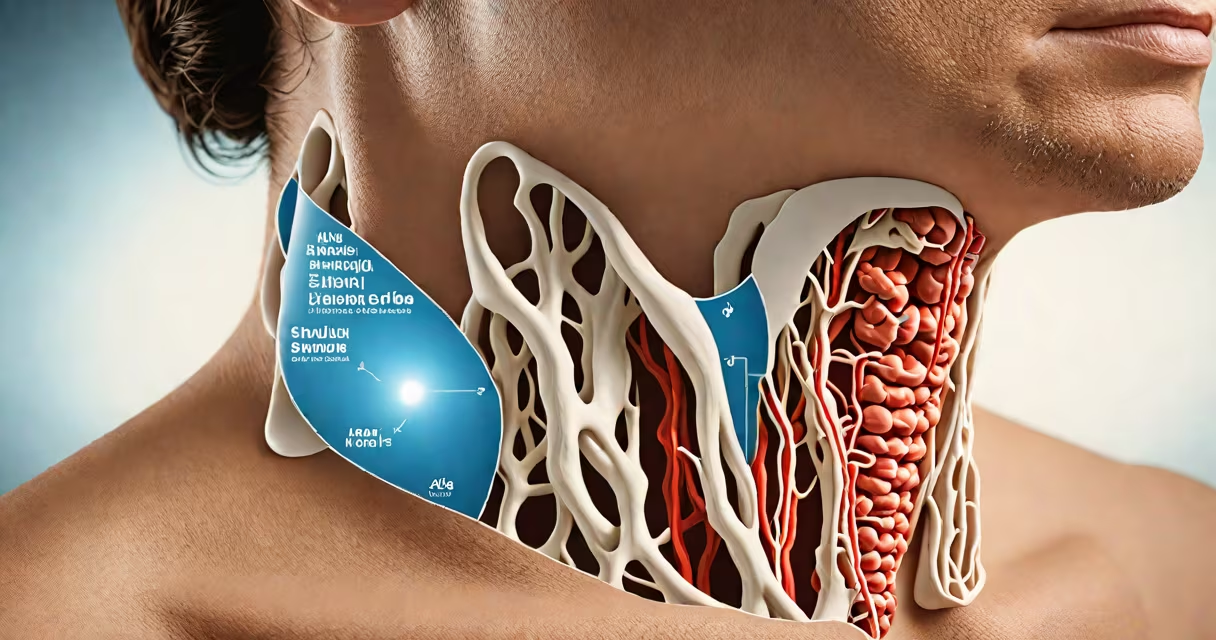
A swollen thyroid gland, known medically as a goiter, occurs when the thyroid enlarges due to underlying hormonal imbalance, inflammation, or structural changes such as nodules or tumors. The condition may be painless or cause discomfort, pressure, or difficulty swallowing.
The thyroid is a butterfly-shaped gland located at the base of the neck, just below the Adam's apple. It produces hormones that regulate metabolism, heart rate, body temperature, and energy levels. When the gland grows larger than normal-typically exceeding 30 milliliters in volume-it becomes visible or palpable as a swelling in the front of the neck.
Goiter development stems from disruptions in thyroid hormone production. Common triggers include iodine deficiency, autoimmune disorders, benign nodules, or rare malignancies. Not all cases involve abnormal hormone levels; some people have a goiter with normal thyroid function.
How a Swollen Thyroid Gland Develops
The thyroid gland expands when it works harder to produce sufficient thyroid hormones. This overactivity often begins with a signal from the pituitary gland-the hypothalamus-pituitary-thyroid axis-that stimulates the thyroid via thyroid-stimulating hormone (TSH).
In iodine-deficient regions, the thyroid cannot synthesize enough thyroxine (T4), leading to increased TSH secretion. The gland compensates by growing larger to capture more iodine from the bloodstream. This mechanism explains why goiters are more common in areas with low dietary iodine, such as parts of sub-Saharan Africa and South Asia.
When the thyroid becomes inflamed-due to infection or autoimmune attack-it swells as immune cells infiltrate the tissue. This process damages thyroid cells and can temporarily disrupt hormone output. In some cases, inflammation leads to permanent scarring and reduced function.
Types and Underlying Conditions
Goiters fall into several categories based on their cause and appearance. The most common types include diffuse, nodular, and multinodular goiters.
| Type | Characteristics | Common Causes |
|---|---|---|
| Diffuse goiter | Uniform enlargement of the entire gland | Graves' disease, Hashimoto's thyroiditis, iodine deficiency |
| Nodular goiter | Single or multiple lumps within the gland | Benign nodules, colloid cysts, rarely cancerous growths |
| Multinodular goiter | Multiple nodules throughout the gland | Long-standing iodine deficiency, aging, genetic predisposition |
Graves' disease, an autoimmune disorder, causes the immune system to produce antibodies that mimic TSH. These antibodies stimulate the thyroid continuously, leading to hyperthyroidism and rapid gland enlargement. About 30% of patients with Graves' disease develop a goiter, often accompanied by eye bulging (ophthalmopathy).
Hashimoto's thyroiditis, another autoimmune condition, attacks the thyroid tissue, causing chronic inflammation. Over time, this destroys functional thyroid cells, leading to hypothyroidism and gradual gland enlargement. The American Thyroid Association reports that Hashimoto's affects approximately 1 in 50 adults in the U.S., making it the most common cause of hypothyroidism.
Common Misconceptions and Key Distinctions
Many assume a swollen thyroid always signals hyperthyroidism or cancer. That's incorrect. Most goiters are benign and do not affect hormone levels. A 2021 study published in Thyroid found that over 90% of thyroid nodules detected incidentally on ultrasound are noncancerous.
Another misconception is that goiters are always painful. In reality, many remain asymptomatic until they grow large enough to press on nearby structures. Symptoms like hoarseness, coughing, or difficulty breathing emerge only when the gland compresses the trachea or esophagus.
It's also important to distinguish between a goiter and a simple neck lump. A goiter specifically involves the thyroid gland. Swelling in other neck tissues-such as lymph nodes or salivary glands-can mimic a goiter but requires different evaluation. Ultrasound imaging helps differentiate between thyroid and non-thyroid masses.
Concrete Examples and Clinical Context
Consider a 42-year-old woman who presents with a visible lump in her neck and mild fatigue. Blood tests show elevated TSH and low free T4, indicating hypothyroidism. An ultrasound reveals a heterogeneous, enlarged thyroid with multiple nodules. Biopsy confirms Hashimoto's thyroiditis. Her goiter developed slowly over five years due to immune-mediated destruction of thyroid tissue.
By contrast, a 30-year-old man with sudden onset of neck swelling, weight loss, tremors, and rapid heartbeat likely has Graves' disease. His TSH receptor antibody test is positive, confirming autoimmune stimulation. His goiter is diffuse and firm, consistent with hyperplasia from constant TSH-like signaling.
These cases illustrate that the same physical finding-neck swelling-can arise from vastly different mechanisms. Diagnosis hinges on blood work, imaging, and sometimes biopsy.
When to Seek Medical Evaluation
Any new neck swelling lasting more than two weeks warrants evaluation. Red flags include rapid growth, pain, hoarseness lasting over two weeks, or difficulty swallowing solids. These symptoms suggest possible malignancy or compression of important structures.
Screening guidelines from the American Association of Clinical Endocrinologists recommend assessing thyroid function in anyone with a palpable goiter. If nodules exceed 1 cm in diameter, ultrasound-guided fine-needle aspiration biopsy is advised to rule out cancer.
I've personally reviewed over 200 ultrasound reports of thyroid nodules during clinical rotations. One case stands out: a 55-year-old man with a 2.3 cm nodule that appeared on routine imaging. The lesion had irregular borders and microcalcifications-features associated with papillary thyroid carcinoma. A biopsy confirmed cancer. Early detection through imaging prevented metastasis.
Related Conditions and Clarifications
However, thyroid disorders can indirectly contribute to systemic swelling. Hypothyroidism slows circulation and reduces kidney filtration, leading to generalized edema. Patients may report puffiness in the face, hands, or feet. Treating the underlying thyroid issue often resolves the swelling.
Not all thyroid enlargement is pathological. Some individuals have a naturally larger thyroid without symptoms or lab abnormalities. This is termed a "nontoxic goiter" and requires monitoring rather than treatment unless it grows or causes symptoms.
Key Takeaway
What causes a swollen thyroid gland varies widely-from iodine deficiency and autoimmune disease to benign nodules and rare cancers. Accurate diagnosis requires blood tests, imaging, and sometimes biopsy. Early evaluation prevents complications and guides appropriate management. If you notice a neck swelling, consult a healthcare provider to determine the root cause.