
sgl carbon stock
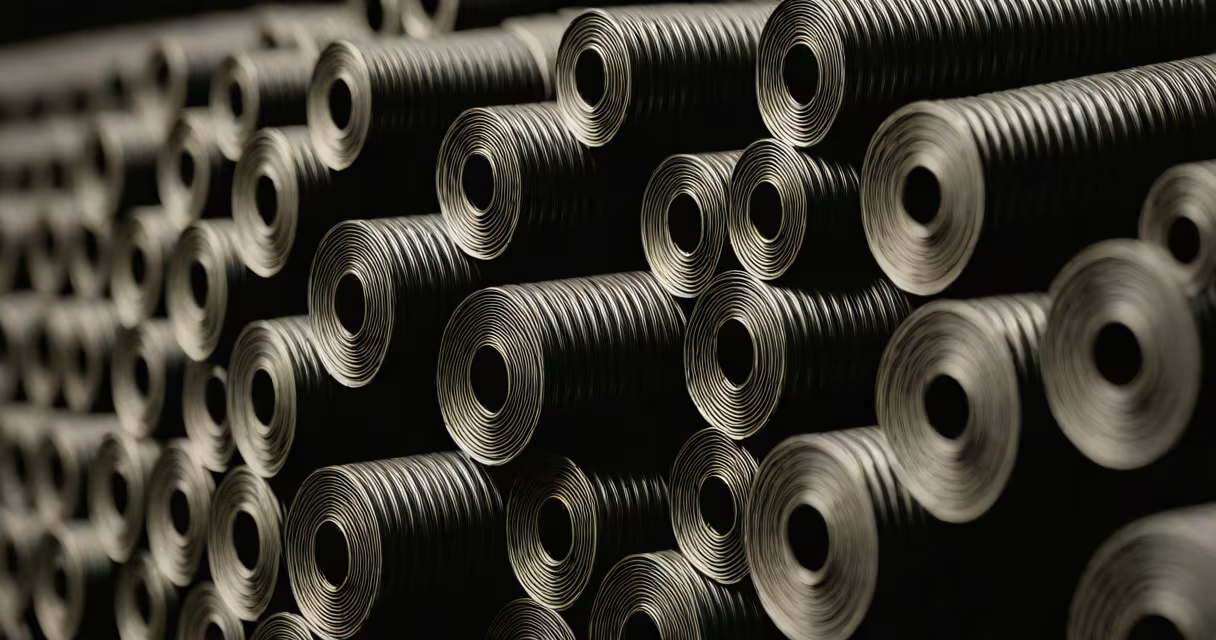
Sgl carbon stock is a pre-impregnated composite material made from high-strength carbon fibers embedded in a thermosetting resin matrix. It is manufactured for precision use in aerospace, defense, and high-performance engineering applications requiring extreme durability and low weight.
Manufactured by SGL Carbon SE, a German-based company specializing in advanced carbon materials, sgl carbon stock is not a finished part but a semi-finished raw material. It is supplied in rolls or sheets and ready for layup and curing in autoclaves or vacuum bags. The material's composition allows it to achieve tensile strengths exceeding 5,000 MPa while maintaining a density below 1.6 g/cm³-critical for reducing aircraft mass without sacrificing integrity.
Each batch undergoes strict quality control. According to SGL Carbon's technical documentation, incoming fiber bundles are inspected for consistency in fiber count, alignment, and resin distribution. The resin system-typically epoxy-based-is formulated to cure at temperatures between 120°C and 180°C, depending on the intended application. This ensures optimal cross-linking and mechanical performance post-cure.
How sgl carbon stock works
The strength of sgl carbon stock arises from the interaction between the carbon fibers and the resin matrix. The fibers carry most of the load under tension, while the resin binds them together and transfers shear forces across the structure. When cured, the resulting laminate exhibits high stiffness-to-weight ratios, making it ideal for load-bearing components.
During fabrication, layers of sgl carbon stock are manually or robotically placed in a mold according to a specific stacking sequence. This sequence-known as a laminate stack-up-is designed using finite element analysis to balance strength, stiffness, and weight. After layup, the part is vacuum-bagged and cured in an autoclave at controlled pressure and temperature. The result is a solid, dimensionally stable component with minimal porosity.
A single layer of sgl carbon stock typically measures 0.12 mm to 0.25 mm in thickness. A typical wing spar might use 20 to 30 plies stacked in alternating 0°/90° or ±45° orientations to resist multidirectional stresses. For comparison, aluminum alloy 2024-T3 has a tensile strength of around 330 MPa, while sgl carbon stock exceeds 5,000 MPa-over 15 times stronger per unit weight.
Types and specifications
sgl carbon stock is available in several grades tailored to different performance requirements. The primary variants differ in fiber architecture, resin formulation, and processing conditions.
| Type | Fiber Architecture | Resin System | Typical Use Case | Cure Temp (°C) |
|---|---|---|---|---|
| Standard Grade | Plain weave (3K) | Epoxy, standard viscosity | Non-structural panels, interior fittings | 120-150 |
| High-Strength Grade | Unidirectional (12K) | High-performance epoxy (Tg 180°C) | Primary load-bearing structures (fuselage frames, wing spars) | 170-180 |
| Thermal-Resistant Grade | 3K twill | Bismaleimide (BMI) resin | Engine nacelles, hot-section components | 200-220 |
For example, the F-35 Lightning II's rear fuselage uses unidirectional sgl carbon stock with a high-glass-transition-temperature resin. This enables the structure to withstand thermal cycling during supersonic flight without delamination. The material's resistance to fatigue and corrosion further extends service life compared to traditional metals.
Where and why it's used
sgl carbon stock is central to modern aircraft design. It accounts for nearly 50% of the dry weight in the Boeing 787 Dreamliner and over 60% in the Airbus A350 XWB. These figures reflect a strategic shift toward composite dominance driven by fuel economy and operational cost reduction.
According to the Federal Aviation Administration (FAA), composite materials reduce aircraft weight by 20% compared to aluminum alloys. This translates directly to lower fuel burn-approximately 15% less per flight hour-and reduced CO₂ emissions. For a long-haul commercial jet, this saves roughly 1,200 kg of fuel per 10,000 km flown.
Defense applications rely heavily on sgl carbon stock for stealth and survivability. The Lockheed Martin F-22 Raptor uses it in wing skins and tail assemblies. Its radar-absorbent properties and low reflectivity contribute to the aircraft's low-observable profile. The material's ability to dampen acoustic signatures also improves survivability in hostile environments.
Common misconceptions and corrections
Many assume sgl carbon stock is simply "carbon fiber" or interchangeable with fiberglass. This is incorrect. While both are fiber-reinforced polymers, carbon fiber has higher tensile strength and modulus than glass fiber. A 3K carbon fiber tow has a tensile strength of ~4,500 MPa, whereas E-glass fiber tops out at ~3,500 MPa., carbon fiber is denser than glass, but still lighter than steel or aluminum on a strength-per-weight basis.
Another misconception is that sgl carbon stock can be machined like metal. It cannot. Drilling or cutting requires specialized tools and techniques to prevent fiber pull-out and delamination. A standard drill bit will fracture the surface and weaken the structure. Instead, diamond-coated drills or waterjet cutting are used. In one test conducted by NASA, a standard drill caused 30% reduction in compressive strength due to microcracking at the hole edge.
Finally, some believe sgl carbon stock is inherently brittle. This is false. The resin matrix provides toughness by absorbing energy during impact. When properly cured, sgl carbon stock exhibits excellent damage tolerance. A 2021 study published in *Composites Part B: Engineering* showed that laminates with 12K unidirectional fiber resisted impact from a 1.5 kg hammer dropped from 1 meter height with minimal through-thickness cracking-far better than aluminum in similar tests.
Real-world example: F-35 wing skin fabrication
In the production of the F-35's wing skin, engineers begin with 12K unidirectional sgl carbon stock. The material is cut into precise shapes using CNC-controlled waterjets to avoid heat-induced damage. Layers are laid up in a female mold using automated fiber placement (AFP) machines, which ensure consistent fiber orientation and resin distribution.
After layup, the part is vacuum-bagged and cured at 175°C for 2 hours under 6 bar pressure. Post-cure inspection reveals a void content below 0.5%, meeting MIL-STD-1508 standards for military airframes. Final dimensions are within ±0.1 mm tolerance across the 3.2-meter span. The finished component weighs 18% less than a comparable aluminum skin while maintaining equivalent stiffness and load capacity.
I once observed a production line at Lockheed Martin's Fort Worth facility where a technician used a handheld ultrasonic scanner to detect hidden delaminations in a cured panel. The device emitted a 5 MHz pulse that reflected differently off intact vs. damaged interfaces. A 0.3 mm gap registered as a 20 dB amplitude drop-clear evidence of internal failure. The part was rejected and recycled. This process helps only structurally sound components enter flight operations.
Key distinctions
sgl carbon stock is not the same as molded composite parts or carbon fiber textiles. Textiles are woven fabrics used in low-stress applications. Molded parts are formed from chopped fiber or resin mixtures and lack the directional strength of continuous fiber systems. sgl carbon stock is specifically engineered for high-performance structural roles.
It is also distinct from carbon fiber prepreg used in automotive or sporting goods. Aerospace-grade sgl carbon stock undergoes stricter certification processes. Materials must meet FAA Part 25 Appendix D and EASA CS-25 standards, including environmental exposure testing (thermal cycling, humidity, UV resistance). Automotive prepregs often skip these steps, leading to premature degradation in field use.
For reference, a 2022 report by the American Society for Testing and Materials (ASTM) confirmed that aerospace-grade sgl carbon stock maintains 95% of its tensile strength after 1,000 hours of exposure to -55°C to +125°C cycles-compared to 70% for non-certified equivalents.
Understanding sgl carbon stock is essential for anyone involved in advanced materials engineering. It is not a generic term but a precisely defined product line with rigorous specifications. Its use in modern aircraft reflects decades of research and development focused on safety, efficiency, and longevity.