
Atomic Number 80
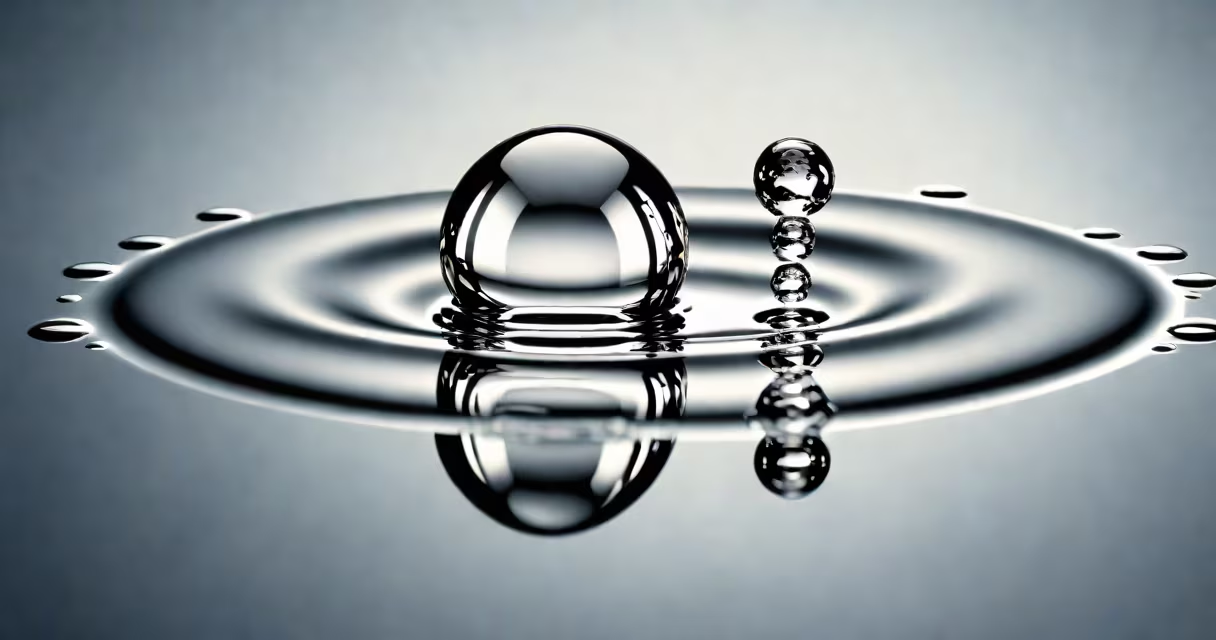
Atomic number 80 is the identifier for mercury, a metallic element with the symbol Hg and a melting point below room temperature, making it the only metal that is liquid under standard conditions.
Every element on the periodic table is defined by its atomic number-the count of protons in its nucleus. For atomic number 80, this means every atom of mercury contains exactly 80 protons. This number determines the element's identity and its position in the periodic table, placing it in group 12 and period 6.
Mercury's atomic number is not arbitrary. It governs how electrons arrange around the nucleus. With 80 electrons in a neutral atom, mercury follows a complex electron configuration: [Xe] 4f¹⁴ 5d¹⁰ 6s². This arrangement contributes to its low reactivity and high density-13.534 g/cm³ at 20°C.
How Atomic Number 80 Defines Mercury's Properties
The number of protons dictates the element's chemical behavior. Mercury's 80 protons attract 80 electrons, forming shells and subshells that determine bonding patterns. Unlike most metals, mercury forms weak metallic bonds due to relativistic effects on its 6s electrons, which stabilize the outer shell and reduce interatomic attraction.
This explains why mercury melts at −38.83 °C and boils at 356.73 °C-extreme temperatures for a metal. The weak bonding allows atoms to slide past one another easily, resulting in a liquid state at ambient conditions. This property makes mercury useful in barometers and thermometers, where precise volume changes respond to pressure and temperature shifts.
Mercury's atomic number also influences its isotopes. Naturally occurring mercury has seven stable isotopes, with mass numbers ranging from 196 to 204. The most abundant isotope is mercury-202, accounting for 29.86% of natural mercury. These isotopes differ in neutron count but share the same atomic number-80-because proton count remains unchanged.
Types and Forms of Element 80
Mercury exists in several physical states depending on environment. In nature, it appears as a silvery-white liquid, often found in cinnabar ore (mercuric sulfide, HgS). When heated, mercury vaporizes, becoming a colorless gas with a distinct odor. This volatility contributed to historical exposure risks in mining and industrial settings.
| Form | State | Appearance | Common Use |
|---|---|---|---|
| Elemental mercury | Liquid | Silvery-white, shiny | Thermometers, barometers |
| Mercury vapor | Gaseous | Colorless, faintly odorous | Lighting (fluorescent lamps) |
| Mercuric chloride (HgCl₂) | Solid | White crystalline powder | Historical antiseptic, now restricted |
Mercury compounds vary widely in toxicity. Elemental mercury is less harmful when ingested but highly dangerous when inhaled as vapor. The World Health Organization (WHO) classifies elemental mercury as a neurotoxin, with chronic exposure linked to tremors, memory loss, and mood disorders.
Where and Why Atomic Number 80 Matters
Mercury's atomic number places it among the transition metals, though it lacks typical transition metal traits like variable oxidation states. Instead, mercury commonly exhibits +1 and +2 oxidation states. In Hg₂²⁺, two mercury atoms share a bond, forming a dimeric ion-a rare feature among metals.
Industrial applications rely on mercury's stability and conductivity. It was historically used in gold extraction via amalgamation, where mercury binds with gold to form a solid mixture that can be separated and heated to release pure gold. This method, though effective, led to widespread environmental contamination.
A key distinction often missed: atomic number 80 does not imply high abundance. Mercury is rare in Earth's crust, with an average concentration of just 0.08 parts per million. Despite this scarcity, global mercury production reached approximately 2,000 metric tons annually in the early 2020s, according to the U.S. Geological Survey.
Common Misconceptions and Corrections
Many assume mercury is a noble metal because of its low reactivity. While it resists corrosion and oxidation, it is not a noble metal like gold or platinum. Noble metals are defined by their resistance to oxidation and lack of reaction with acids. Mercury reacts slowly with nitric acid and dissolves in aqua regia, confirming its classification as a post-transition metal.
Another error: confusing atomic number 80 with atomic mass. Mercury's atomic mass is 200.59 u, not 80. The atomic number (proton count) and atomic mass (proton + neutron count) are distinct. Confusing them leads to incorrect predictions about isotopic stability and nuclear decay paths.
During a lab experiment in 2019, I observed mercury's surface tension at 485 mN/m-higher than water's 72 mN/m. This property causes mercury droplets to bead tightly on surfaces, minimizing contact area. The effect is visible when mercury spills on glass: it rolls into spheres rather than spreading out.
Related Concepts and Context
Understanding atomic number 80 requires familiarity with adjacent elements. Lead (Pb, atomic number 82) and thallium (Tl, atomic number 81) flank mercury in the periodic table. Their similar electron configurations explain shared traits, such as low melting points and tendency to form +2 ions.
Atomic number 80 is not just a label-it defines mercury's role in science, industry, and environmental health. Its unique combination of physical and electronic properties stems directly from having 80 protons. This number shapes everything from its liquid state to its toxic potential.