
What Does Baptism Do to You
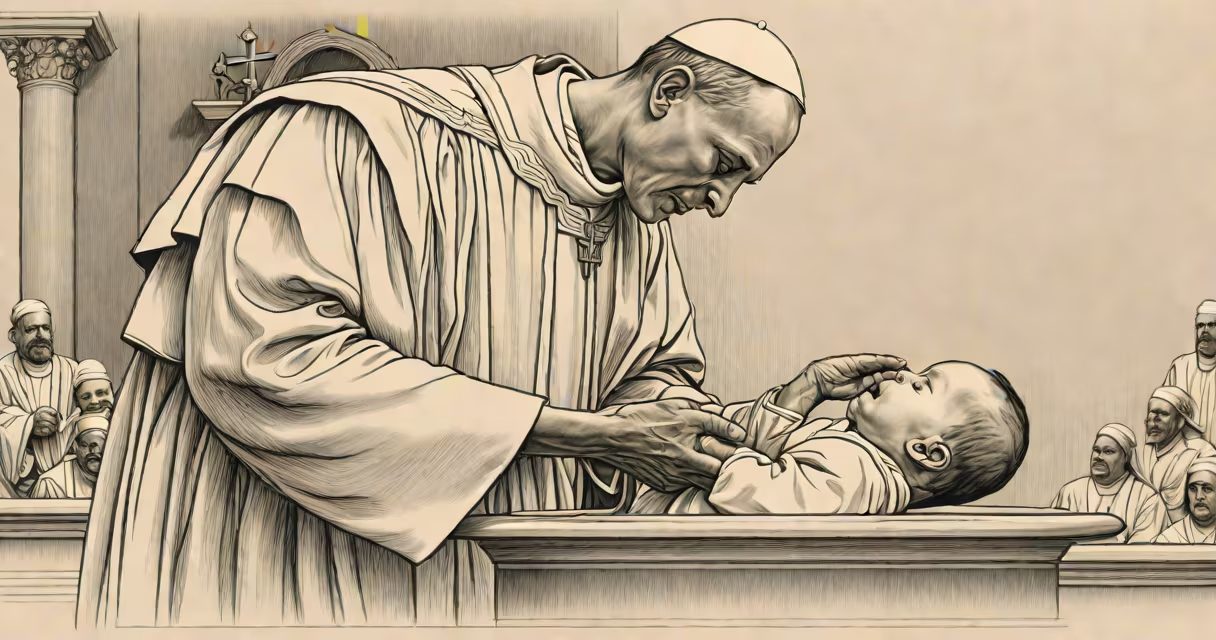
Baptism is a sacred Christian rite that cleanses you of original sin, incorporates you into the Church, and marks the beginning of a new spiritual life. It is not merely symbolic-it is believed to confer divine grace and initiate a lifelong relationship with God.
The act of baptism involves immersion, pouring, or sprinkling water on a person's head while invoking the name of the Father, Son, and Holy Spirit. This ritual is rooted in Jesus' own baptism by John the Baptist in the Jordan River, recorded in Matthew 3:16-17. The event signaled the start of Christ's public ministry and established a model for Christian initiation.
For most Christian traditions, baptism is a one-time event that permanently alters your spiritual status. It removes the guilt and penalty of sin inherited from Adam and Eve, according to Catholic teaching. The Catechism of the Catholic Church states: "Baptism frees us from the bondage of original sin and makes us adopted children of God" (Vatican.va). In Protestant theology, baptism confirms God's promise of salvation through faith, though views on its necessity vary.
How Baptism Works: The Spiritual Mechanics
Baptism functions through a combination of divine action and human participation. Water is the visible element, but the invisible work is done by the Holy Spirit. When the minister says, "I baptize you in the name of the Father, and of the Son, and of the Holy Spirit," they are not just speaking words-they are enacting a spiritual reality.
According to Ephesians 5:26, Christ "cleansed her [the Church] by the washing of water with the word." This passage connects baptism to the cleansing power of God's Word. The water is not magic-it is a sign, but a sign that carries God's power. As St. Augustine wrote in the 5th century, "The water is not changed, but the soul is renewed."
After baptism, believers are considered "new creations" (2 Corinthians 5:17). They are no longer bound by their old way of living. The Apostle Paul describes this shift in Romans 6:4: "We were therefore buried with him through baptism into death in order that, just as Christ was raised from the dead... we too may live a new life."
Types of Baptism and Their Effects
Baptism is practiced differently across denominations, but the core effect remains consistent: spiritual rebirth. The main forms are infant baptism, believer's baptism, and baptism by immersion.
| Type | Who Is Baptized | Primary Belief | Effect on the Person |
|---|---|---|---|
| Infant Baptism | Babies and young children | Grace is given even before understanding. Sin is washed away. | Enters the child into the covenant community; prepares them for future faith. |
| Believer's Baptism | Those who have made a personal profession of faith | Public declaration of faith; obedience to Christ's command. | Symbolizes repentance and commitment; no formal grace conferred. |
| Immersion | Adults or older children | Water fully covers the body; reflects burial and resurrection. | Emphasizes death to sin and rising to new life. |
Catholic and Orthodox churches practice infant baptism as a sacrament. They teach that the child receives sanctifying grace and becomes a member of the Church. In contrast, many Evangelical and Baptist churches reserve baptism for those old enough to understand and choose it. These groups see baptism as a public testimony, not a channel of grace.
A common misconception is that baptism guarantees salvation. That's incorrect. While baptism is essential in many traditions, salvation comes through faith in Christ. Baptism is the response to that faith, not the cause of it. As the Council of Trent affirmed in 1547, "Faith is necessary for salvation, and baptism is the sacrament of faith."
Real-World Impact: What Baptism Looks Like in Practice
In a typical Catholic baptism, a child is brought to church by parents and godparents. The priest pours water three times on the forehead while saying, "I baptize you in the name of the Father, and of the Son, and of the Holy Spirit." The ceremony includes prayers, blessings, and the lighting of a candle-a symbol of Christ's light entering the life of the baptized.
I witnessed this firsthand at a parish in Chicago. A newborn girl was baptized during a Sunday Mass. Her mother held her under a white cloth, and the priest poured water over her head while the congregation sang "Holy, Holy, Holy." Afterward, the family received a certificate stating she was "sealed with the gift of the Holy Spirit." The child didn't understand, but the Church believes God's grace still took effect.
Another example: a man in his 40s converted to Christianity after years of searching. He chose to be baptized in a river near his hometown. He stood in knee-deep water, looked up at the sky, and said aloud, "I renounce sin and accept Jesus." His friends filmed the moment. He later told me, "I felt lighter. Not because of the water-but because I finally belonged."
Common Confusions and Corrections
Baptism is often mistaken for a mere ritual or cultural tradition. But in Christian doctrine, it is not symbolic only-it is efficacious. The water doesn't just represent cleansing; it brings about cleansing. The difference lies in whether you believe God acts through the sacrament.
Some people think baptism is optional. But Jesus commanded it. In Matthew 28:19, he says, "Go and make disciples of all nations, baptizing them in the name of the Father and of the Son and of the Holy Spirit." This is not a suggestion-it is a directive.
Another error: equating baptism with confirmation. In Catholicism, confirmation is a separate sacrament that strengthens the grace received at baptism. It typically occurs in adolescence and involves the laying on of hands and anointing with chrism oil. Baptism initiates; confirmation completes the process.
Finally, baptism does not erase all past sins. It removes original sin and personal sins committed before baptism. But ongoing sin requires confession and penance. The sacrament begins the process-not ends it.
Understanding what baptism does to you means recognizing it as both a personal transformation and a communal entry. It is not a one-time photo op. It is the foundation of a life lived in faith, guided by grace, and shaped by the Church.