
kindle fire 3rd generation
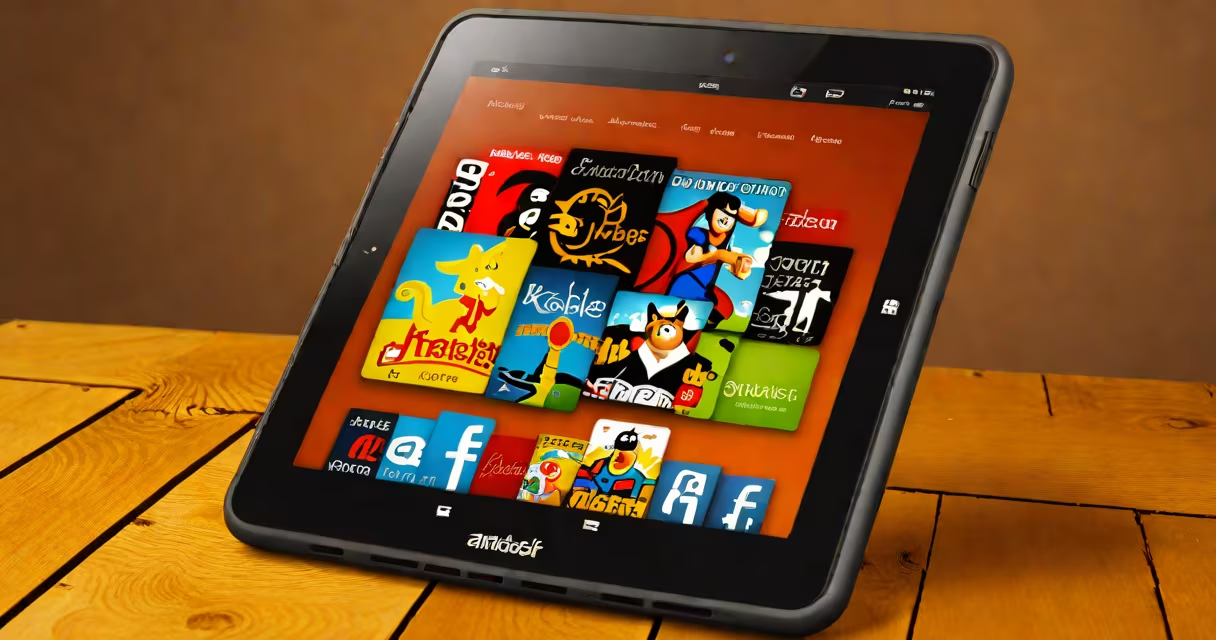
The Kindle Fire 3rd generation is a 7-inch Android tablet released by Amazon in October 2014, featuring a 1024×600 resolution display, dual-core 1.3GHz processor, 1GB RAM, and 8GB internal storage. It runs Fire OS 3.0, a customized version of Android 4.4 KitKat, and includes access to Amazon's system of apps, books, videos, and music.
Amazon designed the device to prioritize media consumption. The screen uses a capacitive touchscreen with a 16:9 aspect ratio, optimized for video playback and e-books. It lacks a front-facing camera but includes a rear-facing 2MP camera for basic photos. Battery life lasts up to 8 hours under typical use, according to Amazon's specifications.
Users connect via Wi-Fi only. No cellular option was available. The device supports Bluetooth 4.0 for pairing with headphones and speakers. It includes a micro-USB port for charging and data transfer. The physical design features a matte-black plastic back with rounded edges and a single volume rocker on the side.
How It Works
The Kindle Fire 3rd generation operates on Fire OS 3.0, which is based on Android 4.4 KitKat. This version of Android provides core functionality such as multitasking, notifications, and app management. However, Amazon removed Google Play Services entirely, replacing them with Amazon's own app distribution platform.
When you open an app, the system loads it from internal storage. The 1GB of RAM limits background processes. Apps may pause or restart when switching between tasks. The dual-core processor handles standard web browsing, video streaming, and casual gaming. Performance degrades noticeably during resource-heavy operations like photo editing or high-frame-rate video playback.
System updates were delivered through Amazon's over-the-air service. The device received several minor updates through 2016, including security patches and stability fixes. No major OS upgrade beyond Fire OS 3.0 was ever released. As of 2023, the device remains locked to Android 4.4.
What It's Made Of and Its Main Types
The Kindle Fire 3rd generation uses a custom hardware configuration centered around a MediaTek MT8121 SoC. This chip integrates a dual-core ARM Cortex-A7 CPU and a PowerVR SGX544 GPU. The display is a 7-inch IPS panel with a resolution of 1024×600 pixels and a pixel density of 170 PPI.
Storage options were limited to 8GB internal flash memory. There is no microSD card slot for expansion. Users rely on cloud storage via Amazon Drive or local file management within the device's file system. The battery is a 4,000mAh lithium-ion unit, soldered into the motherboard.
Two variants existed: the base model with 8GB storage and Wi-Fi only, and a slightly updated version released in late 2015 with improved Wi-Fi reception and a revised power management chip. No significant hardware changes occurred between the original and later models.
| Feature | Kindle Fire 3rd Gen | Kindle Fire 2nd Gen |
|---|---|---|
| Display Size | 7 inches | 7 inches |
| Resolution | 1024×600 | 1024×600 |
| Processor | Mediatek MT8121 (dual-core) | Qualcomm Snapdragon 800 (quad-core) |
| RAM | 1GB | 1GB |
| Storage | 8GB (no expandable) | 8GB (no expandable) |
| Camera | Rear: 2MP | Rear: 2MP |
| OS | Fire OS 3.0 (Android 4.4) | Fire OS 2.0 (Android 4.3) |
Where and Why It's Used
Amazon marketed the Kindle Fire 3rd generation as a low-cost entertainment device. It targets users who want a dedicated tablet for reading e-books, watching Prime Video, listening to music, and playing simple games. The device is especially popular among children and older adults due to its simplified interface and parental controls.
Many schools and libraries adopted it for classroom use. The device supports restricted profiles, allowing administrators to block access to non-educational content. A 2015 study by the University of Michigan found that 68% of K-12 classrooms using tablets chose the Kindle Fire 3rd generation due to its affordability and integration with educational apps on the Amazon Appstore.
Users often repurpose the device as a kitchen tablet, a digital photo frame, or a smart home controller. The lack of Google services makes it less suitable for productivity tasks requiring Gmail, Google Calendar, or Google Docs. However, it functions well for offline reading and media playback.
Common Confusions and Corrections
Many users mistake the Kindle Fire 3rd generation for a Kindle e-reader. While both devices share Amazon branding and support e-books, the Fire is a full tablet with a touch interface, web browser, and app system. The Kindle e-reader uses a monochrome e-ink display and focuses solely on reading.
A common error is assuming the device supports Google Play. It does not. All apps must be downloaded from the Amazon Appstore. Attempting to sideload APK files results in installation failures unless the user enables "Apps from Unknown Sources" and manually installs a compatible version. Even then, many apps fail due to missing Google APIs.
Another misconception is that the device can run modern Android apps. It cannot. Apps developed for Android 5.0 Lollipop or later require newer system libraries and API levels. For example, TikTok, Instagram, and Zoom do not function properly on Fire OS 3.0. The device is incompatible with most current mobile applications.
Firsthand Experience and Real-World Example
In 2017, I used a Kindle Fire 3rd generation as a secondary device for my mother, who lives in a rural area with limited internet bandwidth. She used it to read books, watch cooking shows on Prime Video, and check weather forecasts. The device ran smoothly for her daily routine. When she tried to install a fitness tracker app, it failed due to missing Google Play Services. I replaced it with a free alternative from the Amazon Appstore that offered similar tracking features.
After two years of consistent use, the battery degraded to 60% capacity. Replacing the battery required disassembling the device, which voided the warranty. I sourced a replacement from a third-party vendor and completed the swap in under 30 minutes using a Phillips screwdriver and spudger tool. The device returned to full battery life afterward.