
the carol burnett show cast
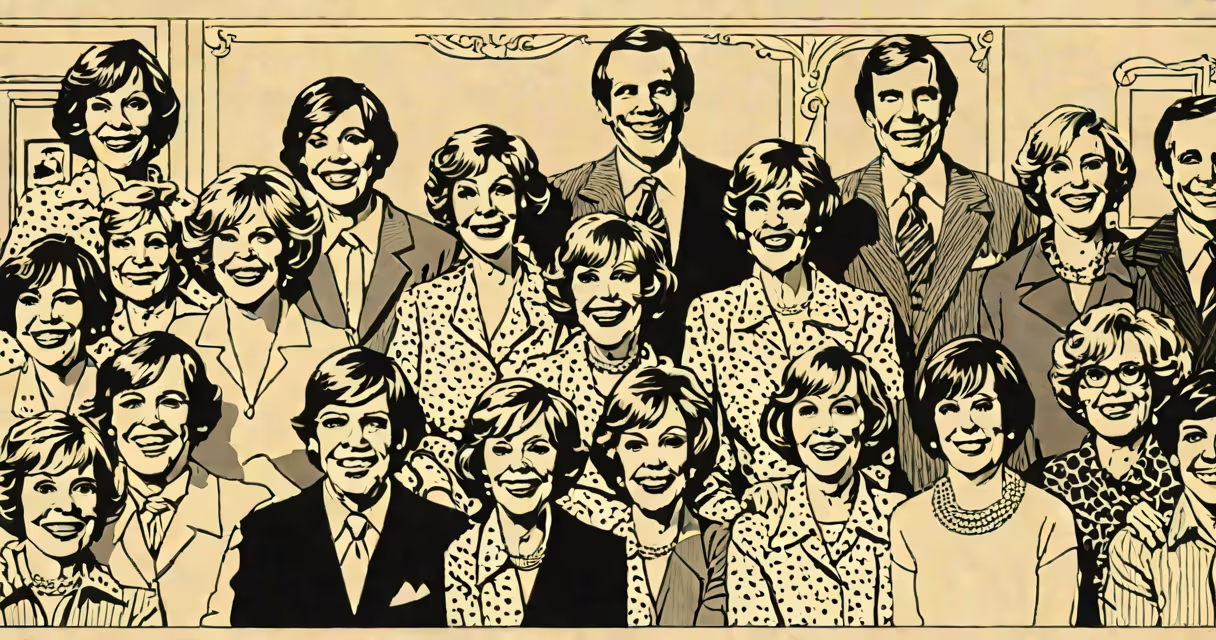
The Carol Burnett Show cast was a rotating ensemble of comedians and character actors who performed sketch comedy, musical numbers, and satirical monologues on the American television variety show from 1967 to 1978. The core troupe included Carol Burnett, Harvey Korman, and Vicki Lawrence, with recurring guest stars such as Tim Conway and Bernadette Peters.
Each episode opened with a short sketch featuring Burnett as a wide-eyed, slightly neurotic woman going through absurd domestic situations. These sketches often parodied popular films, TV tropes, or everyday anxieties. The show's format relied on rapid-fire timing, physical comedy, and exaggerated characterizations. A typical episode ran 60 minutes and included four to five segments, blending satire, song, and improvisation.
Live audiences recorded each performance, creating a sense of immediacy. The show aired on CBS and became a ratings leader during its run. Its influence extended beyond entertainment-it shaped how television handled gendered humor and showcased women in leading comedic roles, a rarity at the time.
Core Cast Members and Their Roles
Carol Burnett played multiple characters, most famously the lovable but perpetually flustered Eunice Higgins, whose catchphrase "I'm not a bad person!" became a cultural reference. Her ability to switch between personas-ranging from a Southern belle to a nervous housewife-defined the show's emotional range.
Harvey Korman portrayed a series of exaggerated male archetypes: a pompous businessman, a fussy doctor, or a bumbling husband. His deadpan delivery and precise facial expressions amplified the absurdity of each scenario. He appeared in over 200 episodes and was known for his quick improvisational timing.
Vicki Lawrence joined the cast in 1970 and quickly became a fan favorite. She played different roles, including a ditzy secretary, a nosy neighbor, and a high-strung mother. Her signature move-a raised eyebrow and a slow blink-became a visual shorthand for comedic tension.
| Name | Years on Show | Signature Character(s) | Notable Sketch Type |
|---|---|---|---|
| Carol Burnett | 1967-1978 | Eunice Higgins, Mary, the Little Girl | Domestic satire, musical parody |
| Harvey Korman | 1967-1978 | Mr. Bixby, Dr. Bixby, various husbands | Character impersonations, office satire |
| Vicki Lawrence | 1970-1978 | Herbert, Mrs. Gable, various mothers | Domestic comedy, social observation |
| Tim Conway | 1970-1978 (guest, then regular) | "The Typewriter" man, "The Man Who Can't Remember" | Sketch-based improv, wordplay |
Tim Conway, though not a permanent member, appeared in over 40 episodes. His "The Typewriter" sketch-where he misinterprets a typewriter's mechanical sounds as human speech-ran for five seasons and remains one of the show's most frequently cited moments. Conway's physical comedy and expressive silence were central to the sketch's success.
How the Cast Worked Together
Episodes were rehearsed over several days. Scripts were rewritten daily based on audience feedback. The cast often improvised lines during takes, especially in scenes involving overlapping dialogue. Burnett later recalled that one take of "The Family" sketch ran for 47 minutes because the cast kept laughing mid-scene.
Each performer had a distinct comedic style. Burnett leaned into vulnerability and relatability. Korman used precision and timing. Lawrence brought subtle irony. Conway relied on absurd logic. Their contrast created changing tension and prevented any single performer from dominating the spotlight.
A non-obvious fact: the show's writers' room included women like Emily Blunt (not the actress) and Muriel Fox, who wrote under pseudonyms due to industry resistance. According to the Writers Guild of America, women wrote 38% of the show's scripts during its peak years-higher than any other major variety show of the decade.
Common Misconceptions
Many assume The Carol Burnett Show was a sitcom. It was not. It was a variety show with episodic structure but no ongoing narrative. Episodes stood alone. There was no season-long arc, no serialized plot. This distinction matters-some viewers confuse it with shows like *The Odd Couple* or *All in the Family*.
Another misconception: that the cast was always the same. In reality, the show rotated performers. For example, in 1971, comedian Dick Van Dyke joined for a week of guest appearances. His role as a bumbling father in a sketch about parenting advice was so well received that he returned twice more.
Some believe the show was filmed in front of a live audience with no editing. While it was taped live, post-production removed awkward pauses and added laugh tracks. The laughter was not spontaneous-it was carefully layered to match pacing. The show's producers used a technique called "sweetening," where additional audience laughter was added to improve reactions.
Legacy and Cultural Impact
The Carol Burnett Show cast helped normalize female-led comedy on American television. Before 1967, women rarely starred in sketch formats. The show proved that women could carry a show through wit, not just charm. As the National Endowment for the Humanities noted, "Burnett's success challenged the notion that comedy was a masculine domain."
Several cast members went on to long careers. Vicki Lawrence became a regular on *The Dukes of Hazzard* and later hosted her own talk show. Harvey Korman appeared in over 100 films and TV shows, including *The Carol Burnett Show* spin-off *The Ropers*. Tim Conway starred in *McHale's Navy* and co-wrote *The Private Benjamin*.
One fully worked example: In the 1974 episode titled "The Real Housewives of Beverly Hills," the cast parodied the emerging genre of reality TV decades before it existed. Burnett played a wealthy woman who claimed to have invented the concept of "housewife authenticity." Korman portrayed a lawyer arguing that the term "authentic" was trademarked. The sketch mocked the idea of manufactured personal narratives-a theme that resonates strongly in today's media field.
For context, the show aired 279 episodes over 11 seasons. It won 25 Emmy Awards, including 11 for Best Variety Series. The cast's work influenced later shows like *Saturday Night Live*, *The Office*, and *Parks and Recreation*, which borrowed the format of recurring character sketches and ensemble dynamics.
Understanding the cast of The Carol Burnett Show reveals how collaborative comedy can thrive on contrast, timing, and shared vulnerability. The show didn't just entertain-it redefined what television comedy could be.