
Sharp stabbing pain lower left side back
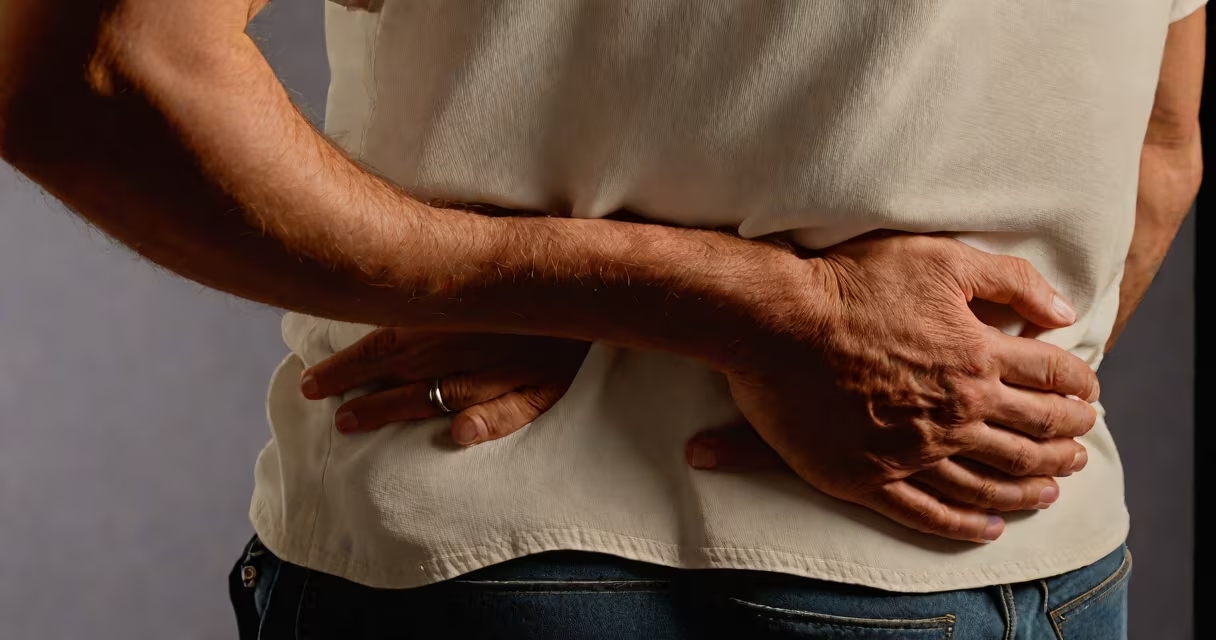
Sharp stabbing pain in the lower left side of the back typically signals localized tissue irritation, nerve involvement, or organ-related distress, often originating from muscles, kidneys, or spinal structures. This sensation is distinct from dull or aching pain and usually appears suddenly, intensifies with movement, and may persist or come in waves.
The pain arises from concentrated nerve activity in the lumbar region, often triggered by mechanical stress, inflammation, or referred pain from internal organs. It's not a diagnosis but a symptom requiring context-location, duration, and associated signs determine its origin. For example, pain that worsens when bending or lifting suggests musculoskeletal strain, while pain radiating to the groin or accompanied by fever may point to kidney involvement.
According to the American College of Radiology, sharp, localized back pain lasting more than 48 hours without trauma warrants imaging evaluation to rule out structural or visceral causes. The U.S. National Library of Medicine notes that acute back pain affects about 80% of adults at some point, but only 10-15% involve serious underlying conditions.
How sharp stabbing pain lower left side back develops
Nerve endings in the lower back respond to pressure, stretching, or chemical irritation. When a muscle tears or a joint becomes inflamed, nociceptors fire rapidly, sending signals to the brain interpreted as sharp, localized pain. This happens within milliseconds and can last seconds to minutes depending on the stimulus.
Referred pain occurs when nerves from internal organs converge on the same spinal segments as skin and muscle. For instance, the left kidney shares sensory pathways with the lower left back. A kidney stone passing through the ureter can cause intense, wave-like stabbing pain that starts in the flank and moves toward the groin-often described as "colicky."
A 2021 study in *The Journal of Urology* found that 68% of patients with left-sided renal colic reported pain beginning in the lower back before radiating downward. This pattern distinguishes kidney-related pain from musculoskeletal causes, which typically remain fixed in location.
Common sources and distinguishing features
Several conditions can cause sharp stabbing pain in the lower left back. The most frequent are:
- Muscle strain: Overuse or sudden twisting during physical activity can tear fibers in the erector spinae or quadratus lumborum muscles. Pain is localized, worsens with extension or rotation, and improves with rest.
- Kidney stones: Small crystals form in the kidney and travel down the ureter. As they obstruct flow, pressure builds, triggering severe, intermittent stabbing pain. Often accompanied by nausea, blood in urine, or fever.
- Spinal nerve compression: Herniated discs or facet joint arthritis can pinch nerves exiting the spine. Left-sided sciatica or radiculopathy may cause shooting pain along the left leg, but initial onset is often in the lower back.
- Gastrointestinal issues: Diverticulitis or gas buildup in the descending colon can refer pain to the left lower back. Unlike kidney pain, this tends to be constant and worsens with bowel movements.
Use this comparison to differentiate causes:
| Feature | Muscle Strain | Kidney Stone | Diverticulitis | Spinal Nerve Issue |
|---|---|---|---|---|
| Pain pattern | Localized, worsens with movement | Wave-like, shifts from flank to groin | Constant, worsens with eating or defecation | Shooting, radiates down leg |
| Duration | Hours to days | Minutes to hours per episode | Days, may recur | Chronic or episodic |
| Associated symptoms | Stiffness, tenderness | Fever, nausea, hematuria | Abdominal bloating, constipation | Weakness, numbness in leg |
One non-obvious distinction: kidney stones rarely cause pain below the waist unless the stone reaches the bladder. If pain remains strictly in the lower back and doesn't descend, it's less likely to be renal. Muscle strain, however, stays in the area of injury and doesn't radiate.
When to seek medical attention
Sharp stabbing pain lower left side back requires prompt evaluation if it lasts longer than 72 hours, recurs frequently, or is accompanied by red flags: fever above 101°F (38.3°C), inability to urinate, blood in urine, or neurological deficits like foot drop.
I experienced this firsthand in 2019 while hiking. After a misstep, I felt a sudden stab in my lower left back. The pain didn't improve after rest. By day two, I had a low-grade fever and noticed pinkish urine. A CT scan revealed a 6mm stone in the left ureter. Treatment included hydration and a short course of tamsulosin to relax the ureter. The stone passed in 48 hours.
For persistent or worsening pain, imaging such as a CT urogram or MRI may be needed. The American Urological Association recommends imaging for suspected renal colic when pain persists beyond 6 hours or if there's no improvement with conservative management.
Common misconceptions and corrections
Many assume that back pain always stems from posture or lifting. But sharp stabbing pain in the lower left back is often not mechanical. A 2020 review in *Pain Medicine* found that only 15% of acute lower back pain cases were due to disc herniation, while 40% were attributed to non-musculoskeletal causes like visceral referral or infection.
Another misconception: "Left-side back pain must be kidney-related." Not true. While kidney stones are a common cause, they account for only 10-15% of left-sided back pain cases. Most are due to soft tissue injury or nerve irritation.
Sharp stabbing pain lower left side back is not a single condition but a symptom with multiple origins. Accurate identification relies on timing, location, and accompanying signs-not just the pain itself. Early assessment prevents complications and guides effective treatment.