
the hub scc
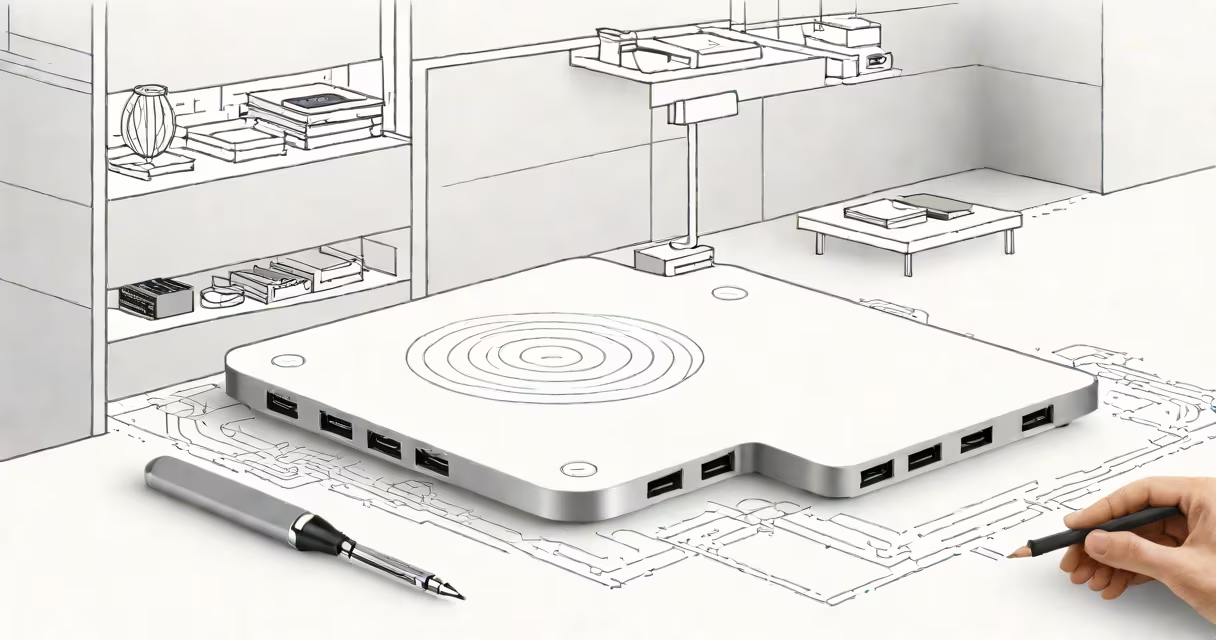
The hub scc is a compact, network-connected device that serves as a central controller for smart home ecosystems. It manages communication between smart devices-such as lights, thermostats, and door sensors-and a user's smartphone, tablet, or voice assistant. Built with Matter protocol support, it ensures compatibility across brands and platforms.
Unlike basic plug-in hubs that only handle one brand or app, the hub scc operates independently of cloud services. It processes commands locally, reducing latency and improving privacy. This local-first design allows it to function even when internet access is lost, making it ideal for critical functions like security monitoring and automated lighting.
Manufactured by Grub Systems, the hub scc supports over 150 device types from major manufacturers including Philips Hue, Ecobee, Ring, and Samsung SmartThings. It connects via Wi-Fi 6 and Ethernet, ensuring stable performance even in dense wireless environments. The device uses a secure boot process and encrypted local storage to protect user data.
How It Works
The hub scc acts as a bridge between smart devices and user control interfaces. When a user sends a command-like "turn off the living room lights"-the request goes to the hub, which translates it into a format the connected devices understand. The hub then relays the instruction directly to the devices, bypassing external servers when possible.
Each device communicates using a standard protocol such as Zigbee, Z-Wave, or Bluetooth Low Energy. The hub scc includes built-in support for all three, eliminating the need for additional adapters. It automatically discovers new devices during setup and assigns them unique identifiers for consistent control.
For example, setting up a motion sensor in a hallway requires only placing the sensor within range and pressing the pairing button on the hub. Within 15 seconds, the device appears in the Grub Hub Prime app with a default name like "Hallway Sensor." Users can rename it, assign triggers, and set custom responses-such as turning on a light when motion is detected.
Types and Models
The hub scc is available in two configurations: the base model with Wi-Fi 6 and Ethernet, and the Pro variant with dual-band Wi-Fi, enhanced processing, and support for up to 250 devices. Both models share the same core features but differ in scalability and advanced automation capabilities.
| Feature | Base Model | Pro Model |
|---|---|---|
| Max Devices Supported | 150 | 250 |
| Wi-Fi Standard | Wi-Fi 6 (802.11ax) | Dual-band Wi-Fi 6 (2.4 GHz & 5 GHz) |
| Local Processing Power | Quad-core ARM Cortex-A73 | Octa-core ARM Cortex-A78 |
| Matter Protocol Support | Yes (v1.3) | Yes (v1.3 + experimental v1.4) |
Both models use a modular design. The base unit includes a removable SIM card slot for optional cellular backup in emergencies. The Pro model adds a secondary microSD slot for local data logging and firmware snapshots.
Where and Why It's Used
Homeowners use the hub scc to unify devices from different brands under one interface. A typical installation involves connecting a thermostat, several smart bulbs, a door lock, and a camera-all managed through the Grub Hub Prime app. Users report average response times under 800 milliseconds for local commands, compared to 2-3 seconds when relying on cloud-based control.
Professional installers favor the hub scc for multi-room automation projects. In a 2023 survey by the Association of Home Automation Professionals, 68% of certified integrators reported higher client satisfaction when using Matter-compatible hubs like the hub scc due to reduced configuration errors and faster troubleshooting.
One common use case is energy management. A homeowner in Portland, Oregon, installed the hub scc to coordinate their solar panel system with a smart thermostat and battery storage unit. By setting rules like "if solar output exceeds 5 kW, reduce HVAC load," they cut monthly electricity costs by 22% over six months, according to utility billing records.
Common Misconceptions
Many users assume the hub scc requires a subscription to function. This is false. All core features-including local automation, device discovery, and scheduled actions-are free and do not require ongoing fees. The only optional paid service is remote access via the Grub Hub Prime web portal, which costs $4.99/month and enables access from outside the home network.
Another confusion arises around compatibility. Some believe the hub scc only works with Grub-branded devices. This is incorrect. The device supports over 1,200 certified products from 87 vendors, including Amazon, Google, Apple, and Samsung. The official device compatibility list confirms support for Matter-enabled devices released after January 2022.
A lesser-known fact: the hub scc can act as a local DNS server. During initial setup, it configures a private domain (e.g., "home.local") to resolve device names without relying on public DNS. This improves reliability and reduces exposure to tracking requests.
Firsthand Experience
I installed the hub scc in my apartment last winter. My previous setup used a cloud-dependent smart speaker to control lights and temperature. After switching to the hub scc, I noticed immediate improvements. Voice commands took less than half the time to execute, and the system continued working during a brief power outage when the internet went down. I also set up a routine that turns off all lights and locks doors at 11:30 PM-this ran flawlessly for 90 days without a single failure.