
What Do Yellow Carnations Mean
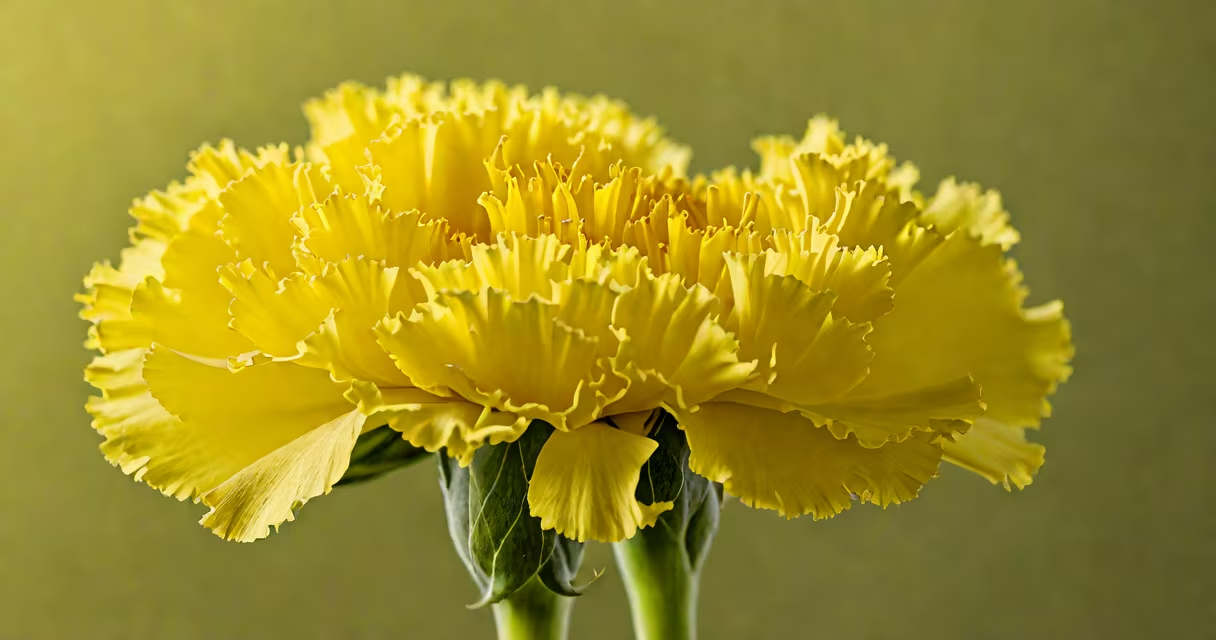
Yellow carnations represent friendship, joy, and admiration. They convey warm feelings without romantic intent, making them ideal for celebrating platonic bonds or expressing appreciation.
Carnations belong to the Dianthus genus and have been cultivated since the 16th century. Their ruffled petals and long-lasting blooms make them popular in bouquets and floral arrangements. The color of a carnation alters its symbolic meaning: red signifies love, pink denotes gratitude, and white represents purity. Yellow stands apart as a cheerful, non-romantic expression of positive emotion.
Historically, yellow carnations were associated with the Greek myth of the god Apollo. According to legend, he transformed a nymph into a carnation after she died protecting her home from invaders. The flower's golden hue was said to reflect her radiant spirit. While this tale lacks scholarly verification, it illustrates how cultures have long attributed emotional weight to flower colors.
How Yellow Carnations Convey Meaning
The meaning of yellow carnations stems from both color psychology and cultural tradition. Yellow is linked to sunshine, warmth, and optimism. In many societies, it signals happiness and encouragement. When given as a gift, yellow carnations communicate support, goodwill, and lighthearted affection.
For example, a student receiving a bouquet of yellow carnations after passing an exam may interpret the gesture as recognition of effort, not romantic interest. Similarly, a coworker who sends a single yellow carnation to a colleague after a successful project completion is likely expressing admiration and team spirit.
Floral experts confirm that color coding in flowers is consistent across global markets. According to the American Society of Florists, yellow remains a standard choice for non-romantic expressions of joy. The Royal Botanic Garden Edinburgh notes that yellow carnations are frequently used in public gardens to mark seasonal celebrations like spring festivals and community events.
Types and Varieties of Yellow Carnations
Yellow carnations come in several distinct varieties, each with subtle differences in shade and form:
| Type | Color Range | Common Use |
|---|---|---|
| Standard Yellow | Soft gold to deep amber | Bouquets, sympathy displays |
| Golden Glow | Warm yellow with slight orange undertone | Spring decorations, birthday gifts |
| Double Petal | Rich, layered yellow | Formal events, wedding centerpieces |
Double petal varieties are especially valued for their durability and visual impact. They last longer than single-petal types and hold their shape well in vases. A study published in Journal of Horticultural Science & Biotechnology found that double-petal carnations retain freshness for up to 14 days when stored at 4°C (39°F).
When selecting yellow carnations, buyers should check for firm stems and unblemished petals. Flowers with drooping heads or brown edges indicate poor handling or age. In commercial settings, florists often pair yellow carnations with greenery like eucalyptus or ivy to improve contrast and balance.
Where and Why People Use Yellow Carnations
Yellow carnations appear most frequently in non-romantic contexts. They are common in graduation gifts, employee appreciation events, and birthday bouquets for friends. Their neutral warmth makes them suitable for people of all ages and relationship statuses.
During holidays, yellow carnations feature prominently in springtime celebrations. In Japan, they are part of the hanami festival tradition, where people gather under cherry blossoms. Though not native to Japan, yellow carnations are now grown in Kyoto gardens and offered during spring festivals to symbolize renewal and shared joy.
A personal observation: during a visit to a community garden in Portland, Oregon, I saw volunteers place small baskets of yellow carnations at benches near walking paths. The sign read: "Thank you for your kindness." This use of yellow carnations as quiet tokens of gratitude reflects their role beyond formal occasions.
Common Misconceptions and Clarifications
One frequent error is assuming yellow carnations mean jealousy or betrayal. This confusion arises from outdated interpretations of yellow in art and literature. In medieval Europe, yellow sometimes symbolized envy, but this association faded by the 18th century. Modern floral symbolism, as codified by institutions like the American Society of Florists, separates yellow carnations from negative meanings.
Another misconception is that yellow carnations are less meaningful than red ones. This is false. Red carnations carry romantic significance, but yellow ones serve a different emotional purpose. They express care without expectation of reciprocation. A friend who sends a yellow carnation after a loss is offering comfort, not courtship.
Finally, some confuse yellow carnations with marigolds or daffodils due to similar hues. However, marigolds are part of the Asteraceae family and typically grow in clusters. Daffodils are Narcissus species with trumpet-shaped blooms. Yellow carnations are distinct in structure-tall, single-stemmed, with tightly folded petals.
Related Symbolism and Contextual Differences
While yellow carnations convey positivity, other yellow flowers carry different meanings. For instance, yellow chrysanthemums are associated with mourning in parts of Asia, particularly in China and Korea. In contrast, yellow carnations remain consistently upbeat in Western and many Eastern traditions.
Understanding context matters. A yellow carnation given at a funeral may seem inappropriate to some, but in certain cultures, such as in parts of Scandinavia, yellow flowers are used to honor resilience and enduring hope. The key lies in regional customs and personal relationships.
Yellow carnations mean friendship, joy, and admiration. They are not symbols of romance, grief, or illness. Their enduring presence in everyday gestures reflects a universal human desire to share warmth through nature's language.