
What Are KPIs in Project Management
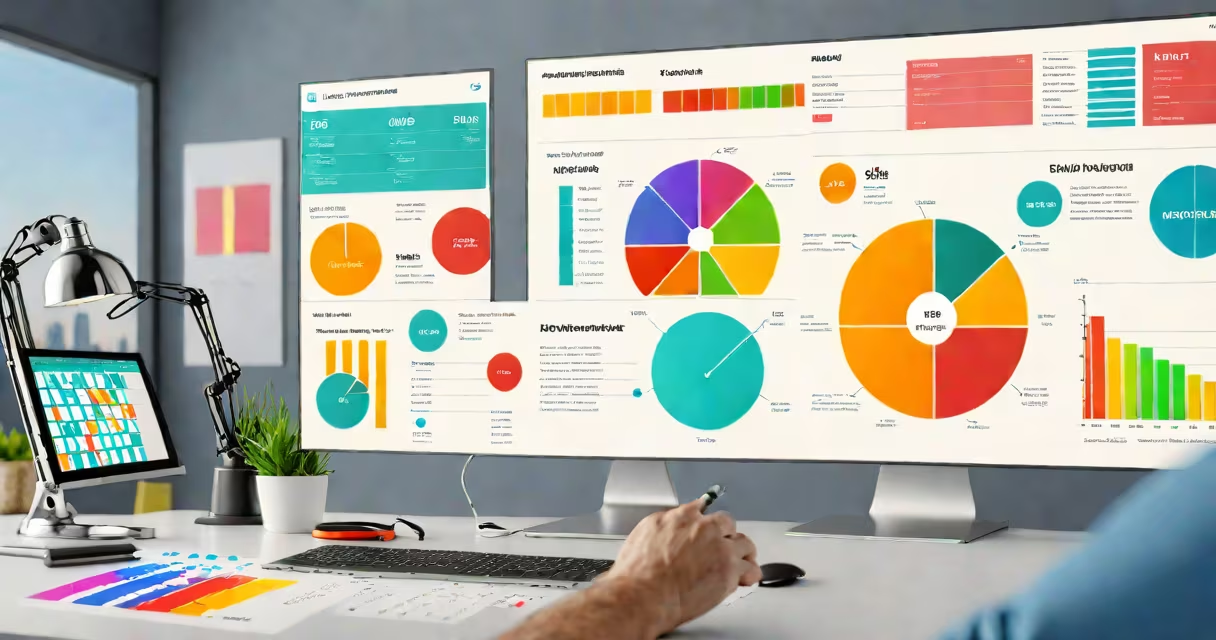
KPIs in project management are measurable values that track progress toward specific project objectives, such as budget adherence, timeline completion, or quality thresholds. They provide objective evidence of whether a project is on track, underperforming, or exceeding expectations. These indicators are tied directly to strategic goals and help teams make data-driven decisions.
Project managers use KPIs to monitor performance across phases-planning, execution, monitoring, and closure. Unlike vague assessments like "on schedule" or "good quality," KPIs deliver precise, numerical feedback. For example, a KPI might report that 92% of tasks were completed within their assigned timeframes, or that the project's actual spend is 8% below forecasted costs.
According to the Project Management Institute (PMI), effective KPIs align with organizational strategy and support continuous improvement. A 2021 PMI report found that projects using well-defined KPIs had a 37% higher success rate than those relying on subjective judgment alone. This shows that KPIs aren't just tracking tools-they're decision-making engines.
How KPIs Work in Practice
KPIs function by linking project activities to predefined targets. Each KPI begins with a clear goal: reduce delivery time, increase user satisfaction, or maintain cost control. Once set, the metric is monitored regularly-daily, weekly, or at milestone checkpoints-to detect deviations early.
For instance, a software development team might track "defect resolution time" as a KPI. If the average time to fix reported bugs drops from 48 hours to 12 hours over two sprints, the team knows improvements in testing or deployment processes are working. This data allows leadership to adjust resources or training before issues escalate.
Some KPIs are leading indicators (predictive), while others are lagging (outcome-based). A leading KPI might be "number of test cases passed per day," which signals future quality levels. A lagging KPI like "post-launch customer complaint rate" reflects results after delivery. Both types are necessary for a complete picture.
Types of KPIs in Project Management
Projects typically use four core categories of KPIs: schedule, cost, quality, and resource utilization. Each category measures a different dimension of success.
| Type | Common Examples | Why It Matters |
|---|---|---|
| Schedule | On-time completion rate, schedule variance (SV) | Measures if work is progressing as planned. A negative SV means delays are occurring. |
| Cost | Budget variance (CV), cost performance index (CPI) | Tracks spending efficiency. CPI below 1.0 indicates overspending. |
| Quality | Defect density, rework rate, customer satisfaction score (CSAT) | Reveals output reliability. High defect density suggests process flaws. |
| Resource | Team utilization rate, task completion rate per person | Identifies burnout risks and workload imbalances. |
Not all KPIs are equally useful. The most effective ones are SMART: Specific, Measurable, Achievable, Relevant, and Time-bound. A KPI like "improve team productivity" lacks clarity. "Increase sprint velocity by 15% over the next quarter" meets all five criteria.
One common mistake is tracking too many KPIs. Research from McKinsey & Company shows that teams using more than 10 KPIs simultaneously saw a 22% drop in focus and decision speed. Limiting to 3-5 high-impact KPIs per project improves clarity and accountability.
Where and Why KPIs Are Used
KPIs appear in nearly every phase of a project lifecycle. During planning, they help define success criteria. In execution, they enable real-time adjustments. At closure, they provide evidence for stakeholder reporting and lessons learned.
A construction firm building a hospital wing might use KPIs to track daily safety incidents, material delivery delays, and labor hours per square foot. If the safety incident rate spikes above 0.5 per 1,000 worker-hours, supervisors trigger a review of site protocols. This prevents accidents and avoids costly delays.
Another example: a marketing agency launching a product campaign uses KPIs like "click-through rate (CTR)" and "cost per acquisition (CPA)." If CPA exceeds $120, the team reallocates ad spend to higher-performing channels. This keeps campaigns profitable and responsive.
I once observed a team using a single KPI-"percentage of user stories completed in each sprint"-to guide daily standups. When the metric dropped below 80%, the team identified bottlenecks in QA handoffs. After adding a dedicated tester, completion rates rose to 94%. That one KPI revealed a hidden workflow issue.
Common Confusions and Corrections
Many people mistake KPIs for general performance reports or dashboards. A dashboard may show multiple data points, but only those explicitly tied to a goal qualify as KPIs. A chart showing team attendance is not a KPI unless attendance impacts project delivery.
Another error is confusing KPIs with vanity metrics. Vanity metrics look impressive but don't drive action. A website launch team might track "total page views" during a campaign. But if users leave within 10 seconds, high traffic doesn't indicate success. Instead, "time-on-page" or "conversion rate" are better KPIs.
There's also confusion between KPIs and OKRs (Objectives and Key Results). OKRs define ambitious goals with measurable outcomes, often used at the organizational level. KPIs are ongoing measurements that track progress toward those objectives. A company might set an OKR to "increase customer retention by 20% in 12 months." The KPIs supporting that goal could be "monthly churn rate" and "support ticket resolution time."
One non-obvious distinction: KPIs should not be changed mid-project. Adjusting targets during execution undermines trust and distorts measurement. If a new risk emerges, update the project plan-but keep the original KPIs intact to preserve historical accuracy.
Final Thoughts
KPIs in project management are not optional tools-they are essential for accountability, transparency, and continuous improvement. They turn abstract goals into observable, trackable outcomes. Without them, teams operate in the dark, reacting to problems instead of preventing them.
Effective KPIs require alignment with business objectives, regular review, and team buy-in. Start small: pick one critical goal and define one KPI to measure it. Expand only when the team demonstrates understanding and consistent use.