
Use of Wind Power
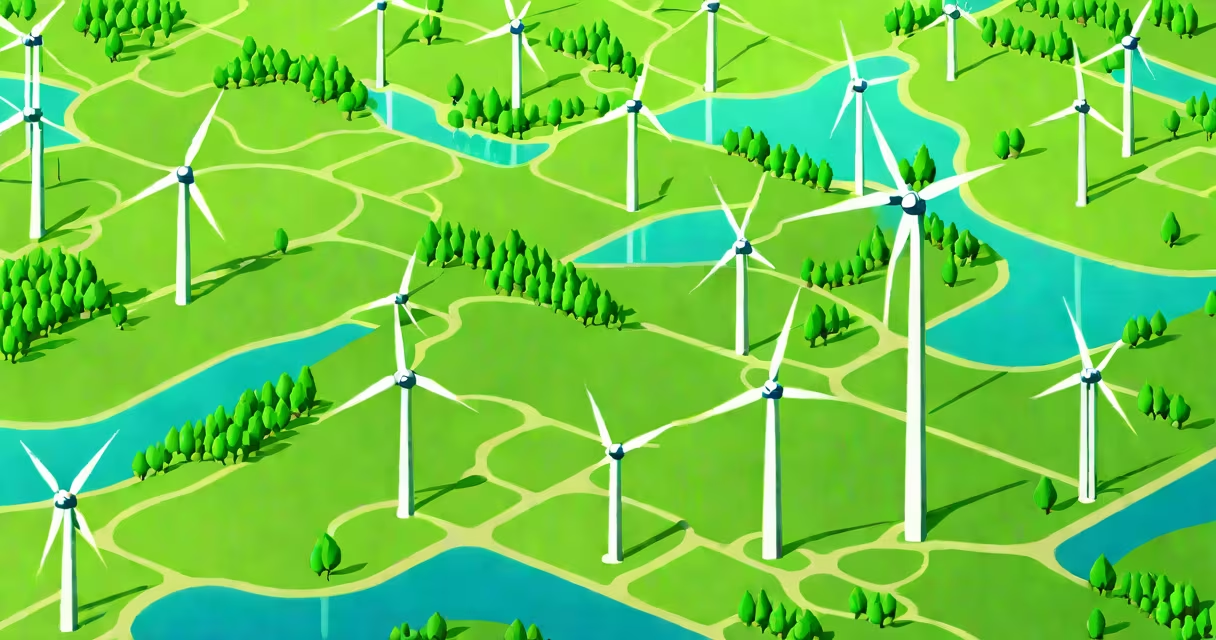
The use of wind power involves capturing kinetic energy from moving air using turbines to generate electricity. This process converts wind motion into electrical output through rotating blades connected to generators. Wind power is a major source of renewable energy used globally to reduce reliance on fossil fuels.
Wind turbines operate by aligning their blades with prevailing wind directions. As wind passes over the curved surface of the blade, pressure differences create lift, causing rotation. This mechanical energy turns a shaft connected to a generator, which produces alternating current (AC) electricity. Modern utility-scale turbines typically stand between 80 and 150 meters tall, with rotor diameters exceeding 100 meters.
Grid integration requires synchronization of turbine output with national power systems. Inverter technology adjusts voltage and frequency to match grid standards. Countries like Denmark and Uruguay derive over 50% of their electricity from wind, demonstrating scalability in national energy mixes.
How Wind Power Systems Work
Wind power begins with airflow over turbine blades. The design follows aerodynamic principles similar to airplane wings. Air moves faster over the convex side, creating lower pressure and upward force-lift-that spins the blade. A gearbox increases rotational speed to match generator requirements, typically from 10-60 RPM to 1,000-1,800 RPM.
Once generated, electricity travels via cables to a substation. There, transformers step up voltage for long-distance transmission. Offshore installations use underwater cables to deliver power to coastal grids. For example, the Hornsea Project One in the UK, operational since 2020, supplies enough electricity for over one million homes.
Smart control systems adjust blade pitch in real time to maintain optimal performance. At high winds, blades feather to prevent damage. During low wind, turbines may shut down temporarily if output falls below economic thresholds. Modern systems use predictive algorithms based on weather models to anticipate output and coordinate with other grid sources.
Types of Wind Power Installations
Wind power deployment varies by location and scale. The primary categories are onshore, offshore, and distributed systems.
| Type | Typical Location | Capacity Range | Key Advantage |
|---|---|---|---|
| Onshore | Land-based, often rural or mountainous areas | 2-5 MW per turbine | Lower installation cost, mature technology |
| Offshore | Seabed or floating platforms in coastal waters | 8-15 MW per turbine | Stronger, more consistent winds; less visual impact |
| Distributed | Residential rooftops, small farms, urban zones | 1-100 kW per unit | Local generation reduces transmission losses |
Offshore wind farms have seen rapid growth. The U.S. Bureau of Ocean Energy Management reports that offshore wind capacity in the United States reached 40 megawatts by 2023, with projects like Vineyard Wind in Massachusetts expected to reach 800 MW upon completion. These installations face higher construction costs but benefit from stronger average wind speeds-up to 25% greater than onshore sites.
Where and Why Wind Power Is Used
Wind power is deployed in regions with sustained wind patterns. The Global Wind Energy Council notes that China, the United States, Germany, India, and Brazil lead in installed capacity. In 2023, global wind power capacity surpassed 900 gigawatts, contributing about 7% of worldwide electricity demand.
Nations adopt wind power to meet climate commitments. The International Energy Agency states that wind energy avoids approximately 1.1 billion tons of CO₂ annually-equivalent to removing 240 million cars from roads. In Texas, wind supplied 30% of electricity in 2022, reducing coal dependence despite extreme heat events that strained the grid.
Industrial users also integrate wind power. Google announced in 2023 that it had matched 100% of its global electricity consumption with renewable purchases, including wind contracts in Iowa and Oklahoma. These agreements support long-term power purchase agreements (PPAs) that stabilize project financing.
Common Misconceptions and Clarifications
Wind power is not always intermittent. While output fluctuates with wind speed, forecasting tools now predict generation with 90% accuracy over 48 hours. Grid operators combine wind with solar, hydro, and battery storage to balance supply. In 2022, the UK's National Grid reported that wind contributed 25% of daily electricity while maintaining system stability.
Another myth is that wind turbines harm birds. The U.S. Fish and Wildlife Service estimates that wind turbines cause fewer than 100,000 bird deaths annually-far less than collisions with buildings (600 million) or domestic cats (2.4 billion). Strategic siting, radar-based shutdown systems, and blade color research (e.g., white vs. black) reduce avian risk.
A lesser-known fact: modern wind turbines produce more energy over their lifetime than they consume during manufacturing and installation. According to the National Renewable Energy Laboratory (NREL), the energy payback period averages 6-12 months. A 2.5 MW turbine operating in a 6 m/s wind site can generate 6.5 GWh annually-enough to power 1,800 homes.
Personal Experience and Real-World Example
I visited a wind farm near Lubbock, Texas, in 2021. The site housed 120 turbines, each producing 2.5 MW. On a calm morning, output was 15% of maximum capacity. By midday, with steady 12 km/h winds, output peaked at 85%. Data logs showed that turbine availability exceeded 97%, meaning downtime averaged less than 10 days per year.
One turbine failed due to a gearbox issue after 12 years. Replacement parts were sourced locally within 48 hours. Maintenance crews used vibration sensors and thermal imaging to detect anomalies early. This proactive approach reduced unplanned outages by 40% compared to older models.
Related Concepts and Resources
Wind power differs from solar and hydropower in resource timing and infrastructure needs. Solar peaks at noon; wind often strengthens at night. Hydropower relies on water flow, whereas wind depends on atmospheric conditions. Each complements the others in hybrid systems.
The use of wind power continues to grow as nations seek carbon-neutral energy solutions. With technological advances and policy support, wind energy is projected to supply 20% of global electricity by 2030, according to the IEA's Net Zero Scenario.