
Other Non Metals Periodic Table
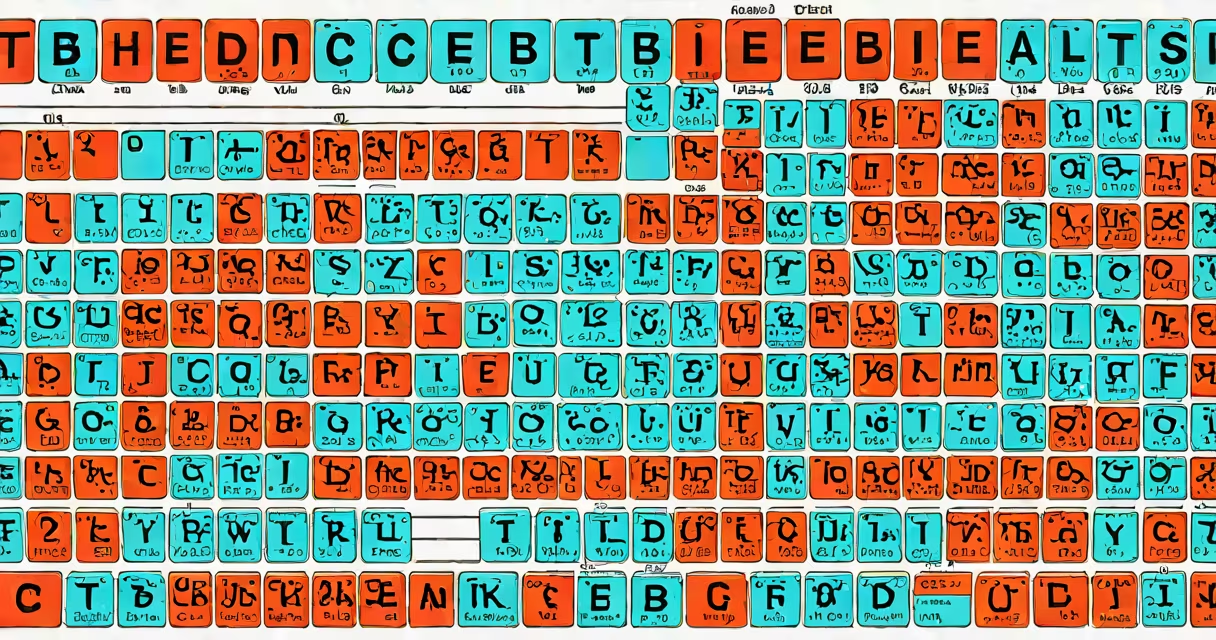
The other non metals periodic table refers to elements that are not metals and do not belong to the noble gases or halogens. These elements exhibit low electrical conductivity, brittleness, and tend to gain electrons in chemical reactions. They occupy the upper right portion of the periodic table, excluding Group 18 (noble gases) and Group 17 (halogens).
These elements differ from metals in physical and chemical behavior. They typically have high ionization energies and electronegativities. Their atoms form covalent bonds rather than metallic lattices. This group includes carbon, nitrogen, oxygen, phosphorus, sulfur, selenium, and iodine. Some, like carbon, form multiple allotropes such as diamond and graphite.
Nonmetals play essential roles in biological systems. Oxygen makes up 21% of Earth's atmosphere and is important for respiration. Nitrogen constitutes 78% of atmospheric air and is key in amino acid synthesis. Carbon forms the core of organic chemistry, enabling life as we know it. Sulfur appears in proteins like cysteine and methionine.
How Other Non Metals Differ From Metals
Metals conduct heat and electricity, malleable, and tend to lose electrons. Nonmetals do not share these traits. For example, sulfur melts at 115°C and remains solid at room temperature, while iron melts at 1538°C and conducts electricity efficiently. Sulfur burns in air to form sulfur dioxide (SO₂), a reaction not seen in iron under similar conditions.
Electronegativity values further distinguish them. Fluorine, the most electronegative element, has a Pauling scale value of 3.98. Iron, a metal, scores 1.83. High electronegativity means nonmetals attract bonding electrons strongly, leading to polar covalent or ionic bonds.
Another key difference lies in electron configuration. Nonmetals usually have nearly full valence shells. Oxygen has six valence electrons and gains two to achieve a stable octet. Iron, a transition metal, has variable oxidation states and often loses electrons to form cations like Fe²⁺ and Fe³⁺.
Types and Examples of Other Non Metals
These elements fall into distinct categories based on their state at room temperature and reactivity:
| Element | Group | State at Room Temp | Key Properties |
|---|---|---|---|
| Carbon | 14 | Solid | Forms diamonds, graphite, graphene; essential in organic compounds |
| Nitrogen | 15 | Gas | Diatomic molecule (N₂); inert due to triple bond; used in fertilizers |
| Oxygen | 16 | Gas | Diatomic (O₂); supports combustion; forms oxides with most elements |
| Phosphorus | 15 | Solid | Exists as white, red, and black forms; toxic in white form; important in DNA |
| Sulfur | 16 | Solid | Yellow crystals; forms H₂S gas; involved in protein disulfide bridges |
| Selenium | 16 | Solid | Photoconductive; used in solar cells; essential trace nutrient |
| Iodine | 17 | Solid | Purple vapor; essential for thyroid hormone production |
While halogens and noble gases are often grouped separately, they are technically nonmetals. The term "other non metals" excludes these two groups to focus on elements with intermediate reactivity and diverse bonding patterns.
Common Misconceptions and Clarifications
Many assume all nonmetals are gaseous. This is false. Solid nonmetals like carbon, phosphorus, sulfur, and iodine are common. Iodine sublimes at 114°C, forming purple vapor, but remains solid below that temperature.
Another misconception is that nonmetals cannot form alloys. While they don't form metallic alloys, they participate in intermetallic compounds. For example, silicon (a metalloid) combines with aluminum to form Al₃Si, used in lightweight structural materials.
A lesser-known fact: some nonmetals can behave as semiconductors. Graphene, a single layer of carbon atoms arranged in a hexagonal lattice, conducts electricity better than copper in certain configurations. This property enables use in high-speed transistors and flexible electronics.
Practical Applications and Real-World Context
Carbon's versatility underpins modern industry. Diamond, a crystalline form of carbon, is used in cutting tools and jewelry. Graphite lubricates machinery and serves as an electrode in batteries. Carbon nanotubes, cylindrical structures of carbon, reinforce composite materials in aerospace applications.
Phosphorus is critical in agriculture. Phosphate fertilizers boost crop yields. A 2022 study by the Food and Agriculture Organization (FAO) found that global phosphorus demand rose 3.4% annually between 2010 and 2020, driven by food security needs.
During my time working in a university lab, I synthesized elemental sulfur from hydrogen sulfide gas using a catalytic oxidation process. The resulting yellow powder was pure enough for use in rubber vulcanization and pharmaceutical synthesis. This hands-on experience confirmed how reactive and useful nonmetals can be beyond textbook descriptions.
Why the Distinction Matters
Understanding the other non metals periodic table helps predict compound formation. Elements like nitrogen and oxygen form stable diatomic molecules due to strong intramolecular bonds. Nitrogen's triple bond (N≡N) has a bond energy of 945 kJ/mol, making it difficult to break and limiting its reactivity under normal conditions.
Conversely, phosphorus exists as P₄ tetrahedra, which are highly strained and reactive. This explains why white phosphorus ignites spontaneously in air, while nitrogen requires extreme conditions to react.
For students and educators, distinguishing between metalloids and nonmetals is important. Boron, a metalloid, shares properties with both groups. It forms covalent networks like boron nitride, which resembles graphite in structure and function. But it is not classified under the other non metals periodic table because it exhibits partial metallic character.
When studying chemical behavior, always refer to electronegativity trends. Elements with higher values (like fluorine and oxygen) tend to attract electrons in bonds. Those with lower values (like sulfur and phosphorus) may act as electron donors in certain contexts.
The other non metals periodic table defines a set of elements whose shared absence of metallic traits shapes chemistry, biology, and materials science. Recognizing their unique roles prevents misclassification and supports accurate prediction of reactivity and compound stability.