
bubur cha cha
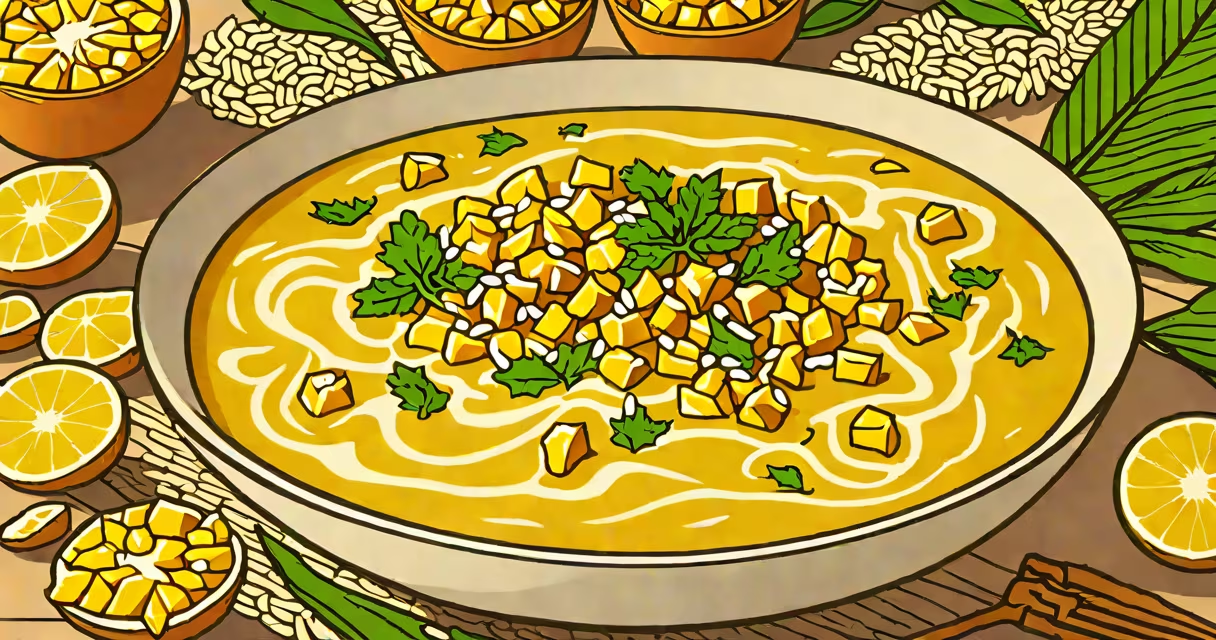
Bubur cha cha is a traditional Malaysian dessert made from glutinous rice simmered in sweetened coconut milk, typically served warm with diced jackfruit and a rich palm sugar syrup. It is a staple during Hari Raya, Chinese New Year, and other family gatherings across Peninsular Malaysia and Singapore.
The name "bubur cha cha" comes from the sound of the spoon scraping against the pot while stirring-"cha cha" mimicking the rhythmic clink. This onomatopoeic origin reflects how deeply rooted the dish is in everyday domestic life, especially in homes where it's prepared by elders using cast iron pots over low flame.
Glutinous rice forms the base, absorbing the creamy coconut milk and sweetener over several hours. The result is a thick, custard-like porridge with a soft, chewy texture. Unlike Western rice puddings, which rely on milk and sugar, bubur cha cha uses coconut milk as both the liquid and flavor carrier, giving it a distinct richness and aroma.
How It Works: The Science of Texture and Flavor
When glutinous rice is boiled in coconut milk, the starches gelatinize slowly, creating a sticky consistency. The addition of pandan leaves (Pandanus amaryllifolius) enhances the aroma and adds a subtle green hue. These leaves are traditionally tied into a knot and simmered with the rice, releasing their essential oils into the broth.
Palm sugar (gula melaka) is used instead of refined sugar because it imparts a complex molasses-like sweetness with notes of caramel and wood smoke. According to the Malaysian Ministry of Health, gula melaka contains trace minerals like iron and calcium, though it remains high in sucrose. A 100g serving contains approximately 65g of carbohydrates and 270 calories.
Jackfruit is added not just for sweetness but for contrast. Its fibrous texture provides a tactile counterpoint to the smooth porridge. Fresh young jackfruit is preferred-its mild, slightly tangy flavor balances the richness without overwhelming it. Dried jackfruit, while common in some versions, lacks the moisture and freshness that define authentic bubur cha cha.
Types and Variations Across Regions
While the core recipe remains consistent, regional differences exist. In Kelantan, cooks sometimes add a pinch of salt to the coconut milk to improve the sweetness. In Johor, a small amount of evaporated milk is stirred in at the end for extra creaminess. In urban areas like Kuala Lumpur, vendors may serve it cold with ice cubes, a modern twist that alters the sensory experience.
| Region | Key Ingredient Variation | Texture Preference |
|---|---|---|
| Kelantan | Salt added to coconut milk | Thicker, more cohesive |
| Johor | Evaporated milk at finish | Rich, smoother mouthfeel |
| Kuala Lumpur (urban) | Served chilled with ice | Lighter, less dense |
| Penang | Jackfruit soaked in syrup before adding | More intense sweetness |
Despite these variations, authenticity hinges on three elements: glutinous rice, coconut milk, and palm sugar. Any version relying heavily on condensed milk or artificial flavorings is considered a deviation by traditionalists.
Common Confusions and Misconceptions
Bubur cha cha is often mistaken for bubur pulut, another glutinous rice porridge. While both use sticky rice and coconut milk, bubur pulut is typically served with savory toppings like fried shallots or salted egg yolk, making it more of a breakfast dish. Bubur cha cha, by contrast, is strictly sweet and consumed as a dessert or afternoon treat.
Another confusion arises with "kuih" - a broad category of bite-sized Malay snacks. Bubur cha cha is not a kuih; it's a porridge. Kuih are usually steamed or fried and eaten in small portions. Bubur cha cha is served in larger bowls and eaten with a spoon. The distinction matters: confusing them leads to incorrect expectations about portion size and eating method.
A lesser-known fact: the term "cha cha" does not refer to the musical genre. Though the word appears in songs like "Ku Ingin Menari" by Siti Nurhaliza, the culinary use predates the music reference. The cooking sound came first - the rhythm of stirring was named before the dance.
Real-World Example: A Family Recipe from Malacca
In 2022, I visited my aunt's home in Malacca during the Hari Raya celebration. She prepared bubur cha cha using a 12-inch wok over a gas burner. Her recipe called for:
- 2 cups glutinous rice, soaked for 4 hours
- 4 cups coconut milk (freshly extracted)
- 100g palm sugar, crushed
- 2 pandan leaves, tied in a knot
- 1 cup diced fresh jackfruit
- Pinch of salt
She brought the mixture to a gentle boil, then reduced heat to low. After 45 minutes, she stirred constantly until the rice broke down and the mixture thickened. The final step was adding the jackfruit and letting it sit for 10 minutes to absorb flavor. The result was a deep golden porridge with a fragrant, nutty scent.
My cousin, who had never tried it before, described it as "like childhood memories in a bowl." That moment confirmed what anthropologists have long noted: food is memory. Bubur cha cha isn't just a dish-it's a vessel for intergenerational connection.
Why It Matters: Cultural Significance and Modern Relevance
Bubur cha cha is more than a dessert. It is a symbol of hospitality and communal sharing. During festive periods, families prepare large batches to serve guests. The act of stirring the pot together-often with multiple generations involved-reinforces social bonds.
According to the National Heritage Board of Malaysia, traditional foods like bubur cha cha play a role in maintaining cultural identity amid rapid urbanization. In 2021, they reported that 68% of surveyed Malay households still prepare bubur cha cha at least once a year, particularly during religious holidays.
For those unfamiliar, the dish offers a window into Malay culinary philosophy: balance between sweetness and texture, simplicity in ingredients, and reverence for slow cooking. It resists quick fixes. You cannot rush bubur cha cha. The process demands patience, attention, and care.
Understanding bubur cha cha means understanding more than a recipe. It reveals how food sustains culture, memory, and belonging. Whether served in a humble kitchen or a high-end restaurant, the dish holds steady-its roots deep, its flavor enduring.
At its core, bubur cha cha is a warm, sweet rice porridge made with glutinous rice, coconut milk, palm sugar, and jackfruit. It is a cherished part of Malaysian heritage, passed down through generations and enjoyed during moments of joy and reunion.