
What Is a Kidney
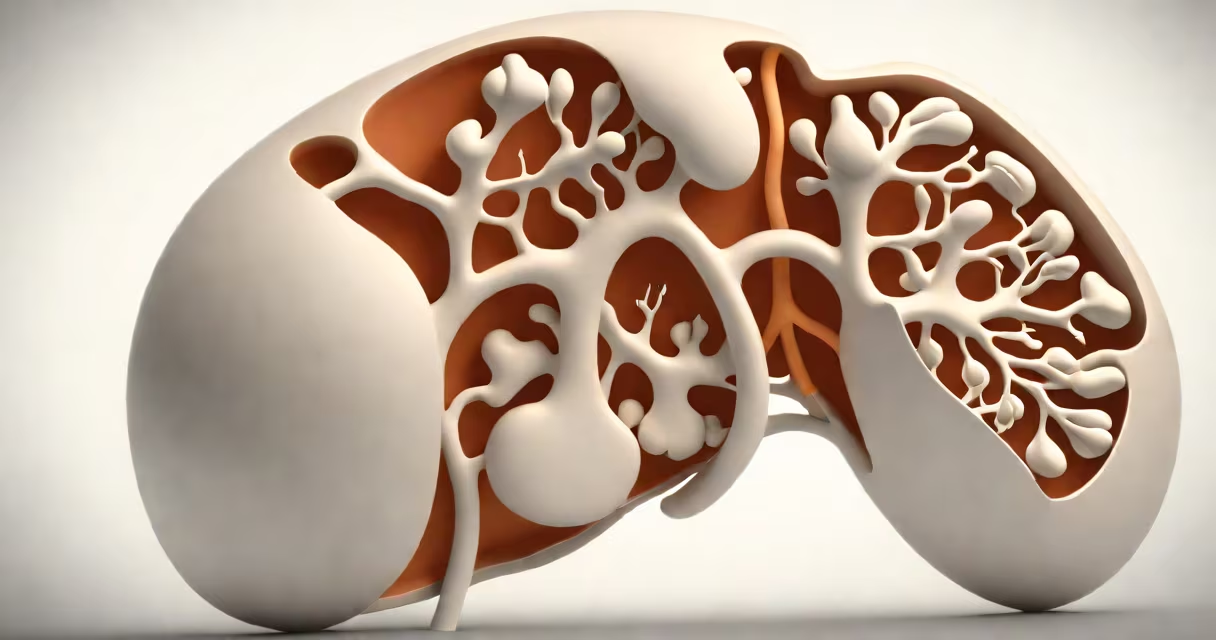
A kidney is a paired, bean-shaped organ located in the lower back that filters waste products, excess fluids, and electrolytes from the bloodstream. Each kidney weighs about 120 to 150 grams and measures roughly 10 to 12 centimeters long. They play a central role in maintaining internal balance and supporting metabolic health.
Kidneys process about 180 liters of blood daily through millions of microscopic filtering units called nephrons. These structures remove toxins like urea and creatinine while conserving essential substances such as glucose, sodium, and water. The filtered liquid becomes urine, which travels through the ureters to the bladder for storage and eventual elimination.
The kidneys also regulate blood pressure via the renin-angiotensin-aldosterone system (RAAS), stimulate red blood cell production by releasing erythropoietin, and activate vitamin D to support bone health. Without functioning kidneys, waste accumulates rapidly, leading to life-threatening conditions within days.
How Kidneys Work
Each kidney contains approximately one million nephrons, the functional units responsible for filtration. Blood enters the nephron through the afferent arteriole and flows into the glomerulus-a dense network of capillaries surrounded by Bowman's capsule. Here, high pressure forces water, ions, and small molecules out of the blood and into the tubule.
As the filtrate moves through the proximal convoluted tubule, loop of Henle, distal convoluted tubule, and collecting duct, the body reabsorbs needed substances and excretes waste. Sodium, potassium, calcium, and bicarbonate are selectively reclaimed. Water is adjusted based on hydration status, controlled by antidiuretic hormone (ADH).
For example, during dehydration, ADH signals the collecting ducts to reabsorb more water, concentrating urine. When fluid levels are high, less ADH is released, resulting in dilute urine. This changing regulation prevents both overhydration and dehydration.
Structure and Composition
Kidneys have three distinct anatomical layers: the cortex, medulla, and renal pelvis. The outer cortex contains most nephrons and is responsible for initial filtration. The inner medulla houses the loops of Henle and collecting ducts, which concentrate urine. The renal pelvis collects urine and funnels it into the ureter.
Each kidney receives blood from the renal artery, a branch of the abdominal aorta. After filtration, deoxygenated blood exits via the renal vein, returning to the heart. The kidneys receive about 20-25% of cardiac output despite making up only 0.5% of body weight, highlighting their metabolic importance.
| Component | Function | Location |
|---|---|---|
| Glomerulus | Filtration of plasma | Cortex |
| Proximal tubule | Reabsorption of glucose, amino acids, sodium | Cortex |
| Loop of Henle | Concentrates urine via countercurrent exchange | Medulla |
| Collecting duct | Final adjustment of water and ion concentration | Medulla to pelvis |
Common Misconceptions and Clarifications
Many people assume that kidneys store urine. They do not. Urine forms continuously in the nephrons and drains into the renal pelvis, then moves through the ureters to the bladder. The bladder stores urine until voiding.
Another misconception is that drinking more water directly "cleanses" the kidneys. While adequate hydration supports kidney function, excessive water intake can overwhelm the kidneys' ability to excrete fluid, leading to hyponatremia-a dangerous drop in blood sodium levels.
Kidney damage often progresses silently. Chronic kidney disease (CKD) affects nearly 15% of U.S. adults, according to the Centers for Disease Control and Prevention (CDC), yet many remain unaware until advanced stages. Early signs include fatigue, swelling in legs, and changes in urination frequency.
Real-World Example: Diabetic Nephropathy
Consider a 58-year-old person with type 2 diabetes who develops proteinuria-excess protein in the urine. Over time, high blood sugar damages the glomerular basement membrane, reducing filtration precision. This condition, known as diabetic nephropathy, leads to progressive loss of kidney function.
Without intervention, the glomerular filtration rate (GFR) drops below 60 mL/min/1.73 m², meeting the clinical threshold for CKD stage 3. At this point, treatment focuses on controlling blood pressure and glucose, using medications like ACE inhibitors or SGLT2 inhibitors to slow decline.
According to the National Institute of Diabetes and Digestive and Kidney Diseases (NIDDK), early detection through routine urine and blood tests can delay progression to end-stage renal disease by years.
Why Size Matters
Kidneys typically measure 10-12 cm in length, 5-7 cm in width, and 3-4 cm in thickness. A kidney smaller than 8 cm may indicate chronic disease or scarring. Imaging tools like ultrasound or CT scans assess size and structure routinely.
For instance, a 2021 study published in Journal of the American Society of Nephrology found that reduced kidney volume correlated strongly with higher risk of cardiovascular events, even after adjusting for age and blood pressure.
Understanding kidney size helps clinicians distinguish between congenital abnormalities, shrinkage due to fibrosis, and acute injury. For reference, a normal-sized kidney fits comfortably within the costal margin, protected by the rib cage.
What Is a Kidney - Final Summary
A kidney is a important organ that filters blood, regulates fluid and electrolyte balance, and contributes to hormone production. Its complex internal architecture enables precise control over bodily composition. Without proper kidney function, survival is impossible beyond a few days.
Recognizing symptoms of dysfunction early-such as swelling, fatigue, or changes in urination-can prevent irreversible damage. Regular screening, especially for those with diabetes or hypertension, remains critical.