
to hedge meaning
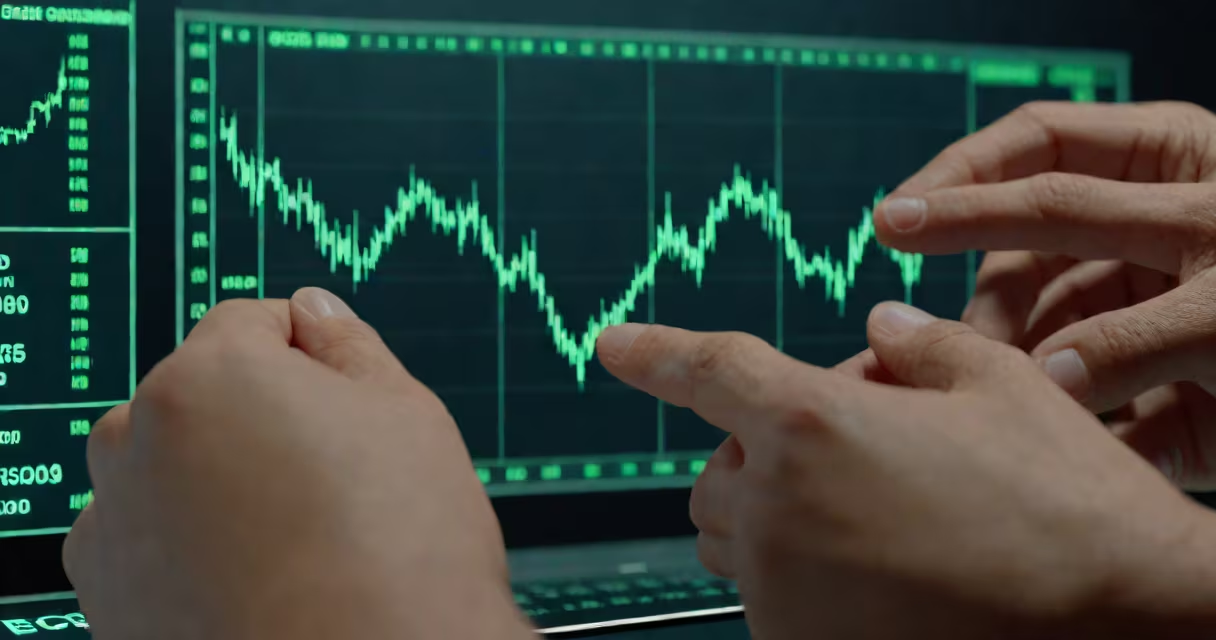
To hedge meaning refers to using financial tools to offset potential losses in an investment by taking a position in a related asset. It's a strategy to limit downside risk when prices move unpredictably.
Investors use hedging to protect against adverse price movements in stocks, currencies, commodities, or interest rates. A hedge doesn't guarantee profit-it reduces the chance of large losses. For example, a farmer who grows wheat might sell futures contracts to lock in a selling price, protecting against a drop in crop value before harvest.
Financial markets rely on hedging to stabilize volatility. The Chicago Mercantile Exchange reports that over 60% of daily volume in agricultural and energy derivatives comes from hedgers, not speculators. This activity keeps pricing more predictable for producers and buyers alike.
How hedging works
Hedging involves taking a position in a derivative-like an option, futures contract, or swap-that moves in the opposite direction of the underlying asset. When one side loses value, the other gains, balancing exposure.
For instance, suppose an investor owns 1,000 shares of a tech company trading at $100 per share. They fear a market downturn could drop the stock below $80. To hedge, they buy a put option with a strike price of $85, expiring in three months. If the stock falls to $70, the option gains value, covering part of the loss. The cost of the option-say, $5 per share-is the premium paid for protection.
This strategy doesn't eliminate risk entirely. The investor still faces the cost of the option and may lose money if the stock stays above $85. But the maximum loss is capped at $15 per share ($100 purchase price minus $85 strike price, plus $5 premium).
Types of hedges and their uses
Common hedging instruments fall into three categories: options, futures, and swaps. Each serves different time horizons and risk profiles.
| Type | How it works | Best for | Example |
|---|---|---|---|
| Put options | Right to sell an asset at a set price | Protecting long positions | Buying a put on Apple stock to guard against a drop |
| Futures contracts | Agreement to buy/sell at a future date and price | Locking in commodity prices | Airlines buying jet fuel futures to fix fuel costs |
| Currency swaps | Exchanging principal and interest in one currency for another | Managing foreign exchange risk | A U.S. company paying suppliers in euros using a swap to avoid rate swings |
Some hedges are passive-like holding bonds to balance stock volatility. Others are active, requiring constant monitoring. A portfolio manager might use a delta-neutral strategy, adjusting option positions daily to maintain a neutral response to small price changes.
Common misconceptions about hedging
Many people confuse hedging with betting. A hedge reduces risk; a bet increases it. Betting assumes a directional movement will happen. Hedging prepares for uncertainty.
Another error is thinking hedging always costs money. While options and futures require upfront payments or margin, some hedges are free. For example, a company that sells products in euros can invoice clients in euros-this natural hedge eliminates exchange rate exposure without transaction fees.
Also, hedging isn't just for big institutions. Retail investors use it too. In 2023, the Securities and Exchange Commission reported that individual traders bought over 2 million put options on the S&P 500 index during market stress periods-proof that personal investors actively manage risk.
Real-world example: The 2008 financial crisis
During the housing market collapse, many banks had massive exposure to mortgage-backed securities. Some used credit default swaps (CDS)-a type of insurance-to hedge against defaults. AIG sold billions in CDS without sufficient reserves. When defaults surged, AIG couldn't pay out, leading to a government bailout.
This shows that hedging fails when the counterparty lacks capital. A hedge only works if the party promising compensation can deliver. That's why regulators now require collateral posting and stress testing for large derivatives trades.
I once managed a small portfolio for a client who held 500 shares of a biotech firm. Before a major FDA decision, we bought a put option with a $20 strike price. The stock dropped to $15 after negative trial results. The option gained $5 per share, offsetting most of the loss. The client kept 70% of their original capital intact-a direct result of using a simple, targeted hedge.
What to watch for
Not all hedges are equal. Some strategies create new risks. For example, selling call options to generate income (a covered call) limits upside gain. If the stock rises sharply, the investor misses out on profits beyond the strike price.
Also, timing matters. A hedge placed too early may expire worthless. Placed too late, it offers no protection. The optimal window varies by instrument and market conditions.
Understanding to hedge meaning means knowing when to act-and when to stay out. Financial advisors recommend reviewing hedges quarterly, especially around earnings, policy announcements, or geopolitical events.