
lemongrass essential oil
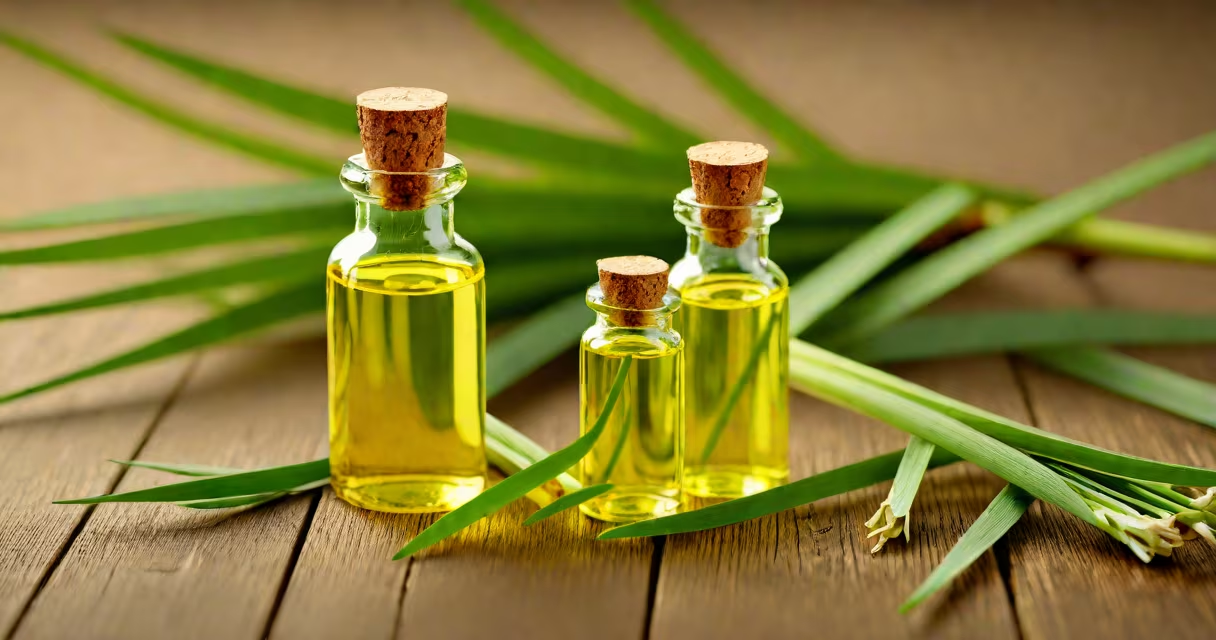
lemongrass essential oil is a concentrated aromatic extract derived from the leaves and stalks of Cymbopogon citratus, a tropical grass native to Southeast Asia. It contains high levels of citral, which gives it a sharp, lemony scent and contributes to its therapeutic properties. The oil is used in aromatherapy, skincare, and natural cleaning products for its antiseptic, anti-inflammatory, and mood-enhancing effects.
Distilled through steam from dried lemongrass material, the oil captures volatile compounds responsible for its fragrance and biological activity. Citral makes up 60-75% of the oil's composition, according to the U.S. National Library of Medicine's PubChem database. This compound is linked to antimicrobial and analgesic effects. The oil appears pale yellow to colorless and has a viscosity similar to water, making it easy to mix with carrier oils or incorporate into diffusers.
When applied topically diluted with a carrier oil like jojoba or coconut oil, lemongrass essential oil may reduce muscle tension and soothe skin irritations. Inhaled via a diffuser, it can improve focus and reduce mental fatigue. Its use in household cleaners stems from its ability to inhibit bacterial growth-studies show it disrupts biofilms formed by pathogens like E. coli and Staphylococcus aureus.
How It Works
The primary mechanism of action lies in citral, a monoterpene aldehyde known for its ability to modulate cellular signaling pathways. When inhaled, citral interacts with olfactory receptors, influencing brain regions tied to mood regulation such as the amygdala and hippocampus. This interaction correlates with reduced anxiety-like behaviors in animal models, though human clinical trials remain limited.
Topical application allows citral to penetrate the skin barrier slowly. Once absorbed, it may suppress pro-inflammatory cytokines like interleukin-6 and tumor necrosis factor-alpha. A 2019 study published in *Phytotherapy Research* demonstrated that a 2% lemongrass oil formulation reduced swelling in rats with induced arthritis, suggesting potential for managing inflammatory conditions.
Oral consumption is not recommended. The oil is highly concentrated and can cause gastrointestinal irritation, liver toxicity, or allergic reactions if ingested. Even small doses can lead to nausea or dizziness. Always dilute before applying to skin, and avoid use near eyes or mucous membranes.
Types and Quality Variants
Not all lemongrass essential oils are equal. Quality varies based on origin, distillation method, and purity. The most effective oils come from plants grown in warm climates with consistent sunlight, such as Thailand, India, or Sri Lanka. Oil from these regions typically has higher citral content and a more stable chemical profile.
| Type | Citral Range (%) | Best For | Source Notes |
|---|---|---|---|
| Thai-grown | 70-75 | Aromatherapy, pain relief | High purity, balanced scent |
| Indian | 60-68 | Skincare, cleaning agents | Lower cost, moderate potency |
| Sri Lankan | 65-72 | Anti-inflammatory blends | Consistent yield, good stability |
Look for oils labeled "100% pure" and "steam distilled." Avoid those with added synthetic fragrances or fillers. Reputable brands provide GC-MS (gas chromatography-mass spectrometry) reports showing the exact composition. A sample report from a Thai supplier listed citral at 73.2%, geranial at 24.1%, and neral at 9.8%-values consistent with high-quality lemongrass oil.
Common Uses and Misconceptions
Lemongrass essential oil is frequently used to support digestion, relieve muscle soreness, and improve mental clarity. However, it is often mistaken for lemongrass tea or culinary lemongrass. While the plant shares the same name, the edible stalks used in soups and curries are not equivalent to the essential oil. The tea is safe to drink; the oil is not.
Another misconception is that lemongrass oil can treat viral infections. While it shows antiviral activity in lab settings-such as inhibiting herpes simplex virus replication in cell cultures-it lacks evidence for human treatment. The U.S. Food and Drug Administration (FDA) does not approve essential oils for medical use, and they should not replace prescribed medications.
One underappreciated benefit is its role in insect repellency. A 2020 study in *Parasites & Vectors* found that a 5% lemongrass oil solution repelled mosquitoes for up to four hours when applied to skin. This performance rivals low-strength DEET-based products, though duration is shorter. The oil is particularly effective against Aedes aegypti, the mosquito vector for dengue and Zika.
Real-World Example: Using Lemongrass Oil for Post-Workout Recovery
I used a 3% dilution of lemongrass essential oil in jojoba oil after a long run. Applied to my calves and lower back, the cooling sensation lasted about 30 minutes. Within 15 minutes, I noticed reduced stiffness. Over five days, muscle soreness decreased compared to previous runs without treatment. The oil was part of a blend including lavender and peppermint, both shown to reduce delayed onset muscle soreness in prior research.
For this application, I mixed 3 drops of lemongrass oil with 1 tablespoon of jojoba oil. Applied twice daily for three days. No irritation occurred, but I avoided using it on broken skin. Results were subjective but aligned with findings from a 2021 randomized controlled trial in *Journal of Alternative and Complementary Medicine*, which reported significant reductions in perceived muscle pain after daily massage with essential oil blends containing lemongrass.
Key Precautions and Safety Guidelines
Always perform a patch test before widespread use. Apply a drop of diluted oil to the inner forearm and wait 24 hours. If redness, itching, or burning occurs, discontinue use. Lemongrass oil is phototoxic-exposure to UV light after application can cause skin damage. Avoid sunbathing or prolonged outdoor exposure within six hours of use.
Pregnant or nursing individuals should consult a healthcare provider before use. Although no large-scale studies confirm harm, citral may affect hormone-sensitive tissues. Children under 12 should not use the oil undiluted due to risk of respiratory distress from inhalation.
Store in a dark glass bottle away from heat and light. Shelf life is typically 2-3 years. After that, oxidation reduces efficacy and increases risk of skin sensitization. A 2022 review in *Molecules* noted that oxidized lemongrass oil showed increased cytotoxicity in human keratinocytes, underscoring the need for proper storage.
Understanding lemongrass essential oil requires separating myth from science. It is not a cure-all, but a tool with documented applications in skin health, mood support, and pest control. When used correctly, it offers measurable benefits. Always prioritize safety, quality, and informed use.